

Turkey Gravy from Drippings (Easy Homemade Recipe)
Make rich, homemade turkey gravy from drippings with reserved turkey fat, flour, and chicken broth. This easy turkey drippings gravy recipe is perfect for Thanksgiving!
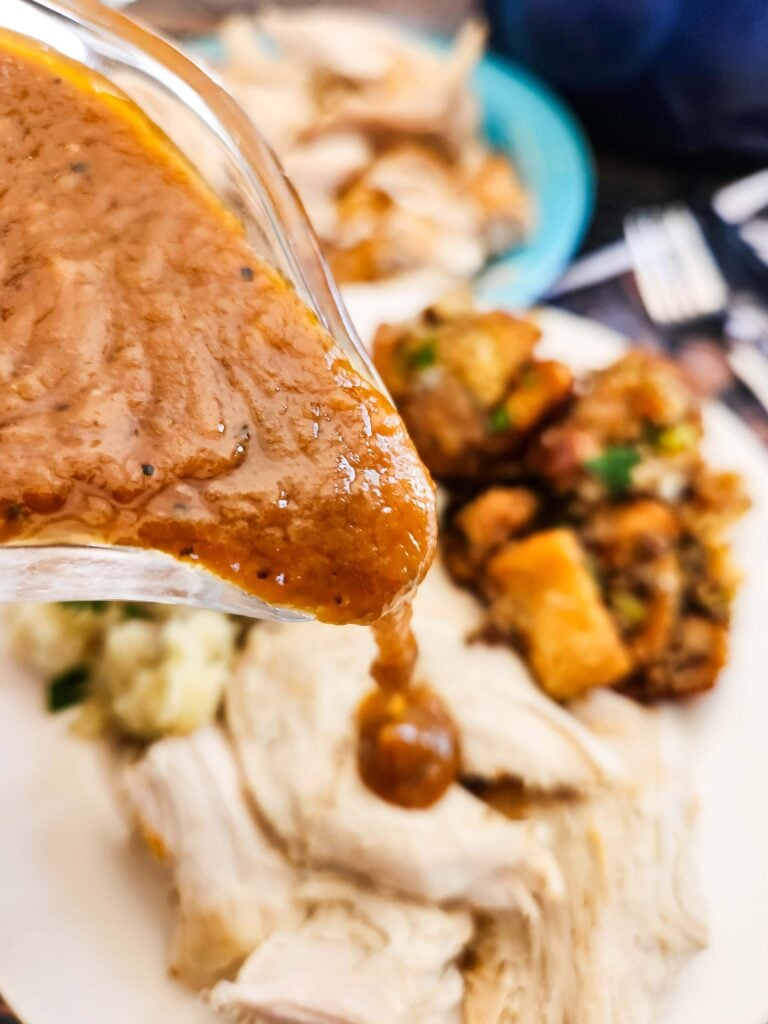
Turkey Gravy from Drippings (Easy Homemade Recipe)
If there’s one thing Thanksgiving dinner absolutely cannot be without, it’s a big boat of homemade turkey gravy. And this turkey gravy from drippings is where all that rich, roasted turkey flavor really comes together.
Made with the flavorful juices left in your roasting pan, reserved turkey fat, flour, and low-sodium chicken broth, this easy turkey gravy recipe turns simple ingredients into a smooth, savory gravy that’s made for mashed potatoes, stuffing, turkey, and pretty much anything else on your plate.
The secret is separating the fat from the turkey juices, using that flavorful turkey fat to make a roux, and scraping up all those browned bits left behind in the roasting pan. That’s flavor you don’t want to wash down the sink!
And don’t worry if you’ve never made homemade gravy before. I’ll walk you through it. Once you see how easy it is, you may never reach for the jarred stuff again.
.. because the gravy is the best part of Thanksgiving dinner .. I will die on that hill 🙂
Why You’ll Love This Turkey Gravy Recipe
- Real turkey flavor: Using the pan drippings gives this gravy a rich, roasted flavor you just can’t get from broth alone.
- A simple homemade roux: Reserved turkey fat and flour create the base that thickens the gravy.
- Easy to adjust: Add more broth for a thinner gravy or a little flour slurry if you need to thicken it.
- Perfect for Thanksgiving: Make it while the turkey rests and have a generous batch ready for the dinner table.
- No fancy ingredients: Just turkey drippings, fat, flour, broth, and a few simple seasonings.
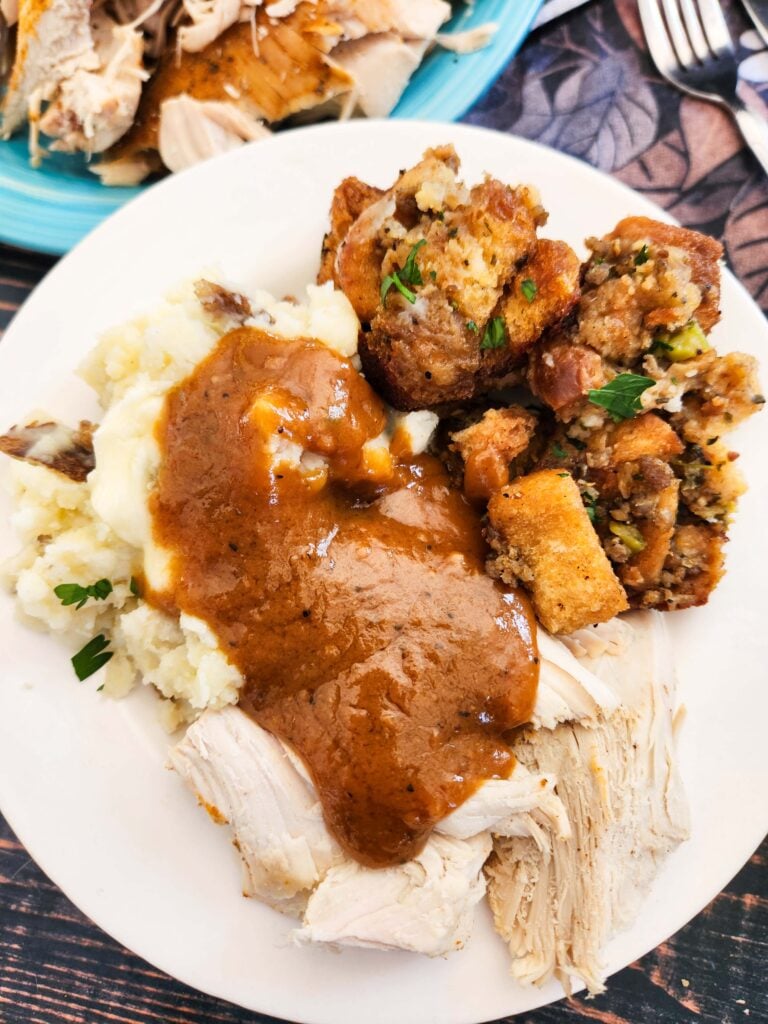
Ingredients You’ll Need
- Turkey pan drippings: These are the flavorful juices left in the roasting pan after the turkey cooks. Separate the fat from the juices before using.
- Reserved turkey fat: You’ll use about 3–4 tablespoons to make the roux. Turkey fat adds wonderful roasted flavor, but you can combine it with butter or use butter if you don’t have enough reserved fat.
- All-purpose flour: About 5–6 tablespoons helps create a thick, flavorful roux. The mixture should be pasty and easy to whisk, not swimming in grease.
- Low-sodium chicken broth: This gives you the extra liquid needed to make a generous batch of gravy without overpowering the turkey drippings. Turkey stock works, too.
- Freshly cracked black pepper: Don’t be shy! I use quite a bit of pepper in my gravy. Regular ground black pepper works just fine, too. We don’t need to be fancy to make great gravy!
- Kosher salt: Add only after tasting. Turkey drippings can already be salty, especially if your turkey was brined or self-basting.
- Lemon juice or apple cider vinegar (optional): A tiny squeeze or splash can brighten the finished gravy and balance its richness. .. and no, your gravy will NOT taste like lemon 🙂
How to Make Turkey Gravy from Drippings
- Separate the turkey fat: Once your turkey is out of the roasting pan, carefully pour all the liquid and juices into a fat separator or a large measuring cup or heat-safe bowl. Let the fat rise to the top, then separate the flavorful turkey juices underneath. If you have a little extra time, pop the separator into the refrigerator to help the fat separate.
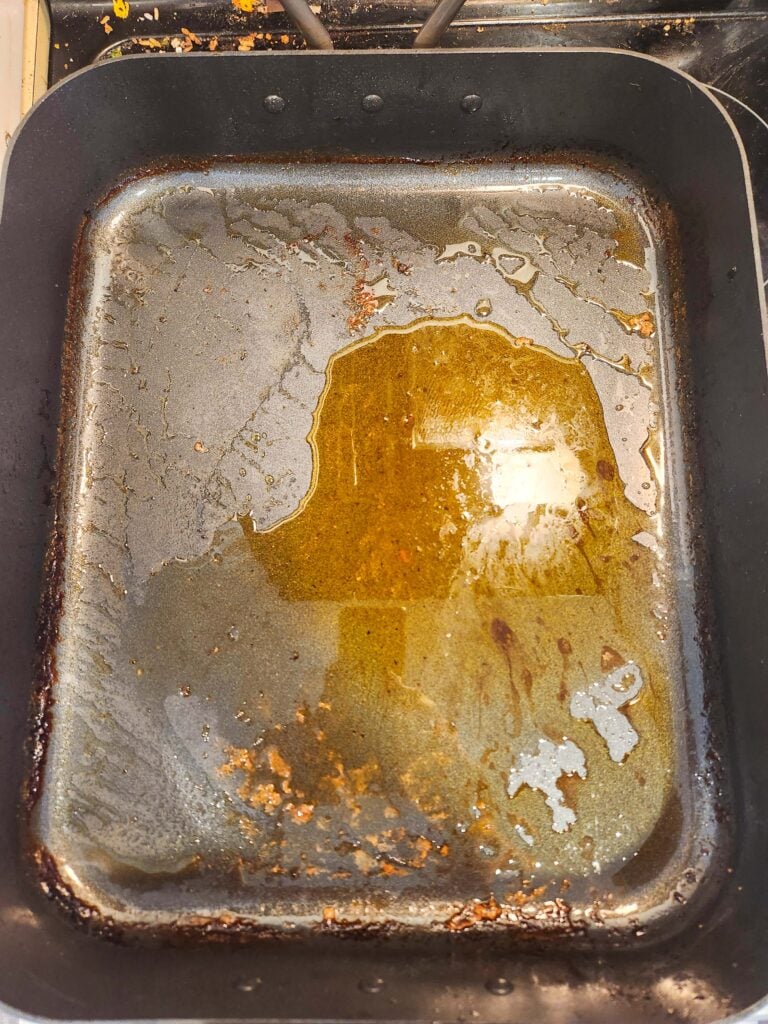
- Prepare the roasting pan: Leave those browned bits right where they are in the bottom of the roasting pan. That’s flavor you don’t want to lose! Place the pan over two stovetop burners on low heat, or transfer everything to a large saucepan if you need the extra kitchen space.
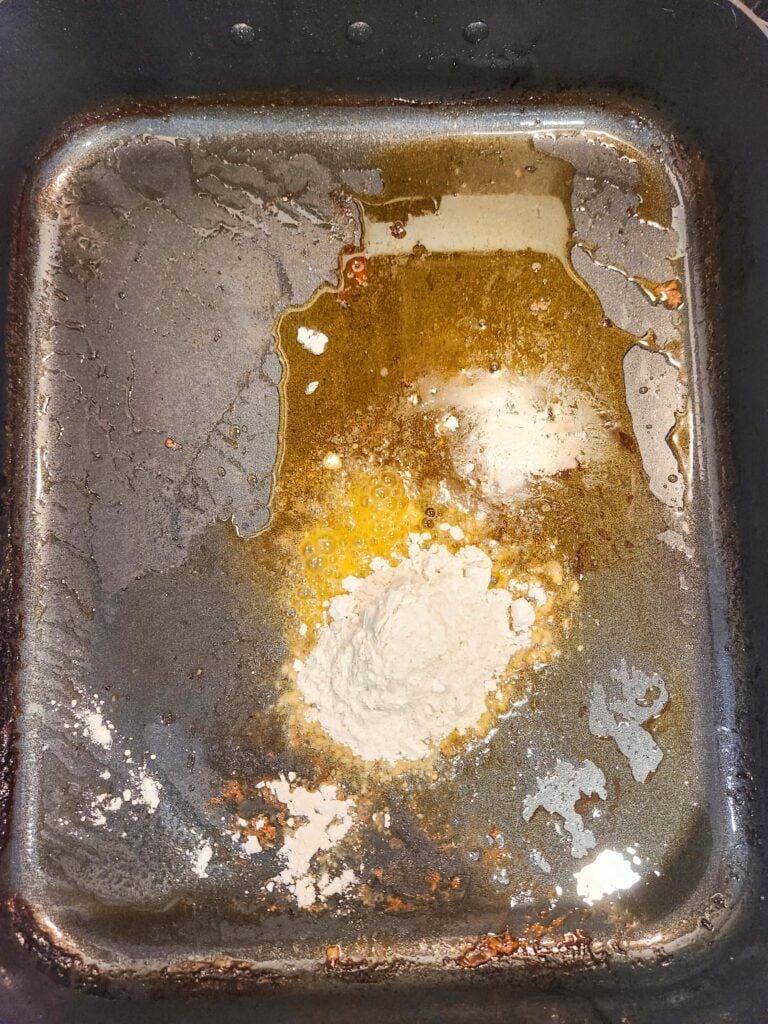
- Make the roux: Add 3–4 tablespoons of reserved turkey fat to the pan. Whisk in 5–6 tablespoons of all-purpose flour, scraping up the browned bits as you go. The mixture should be thick and pasty but still easy to stir. If it seems too dry, add another tablespoon of fat. Cook over low heat for about 4–5 minutes, whisking frequently.
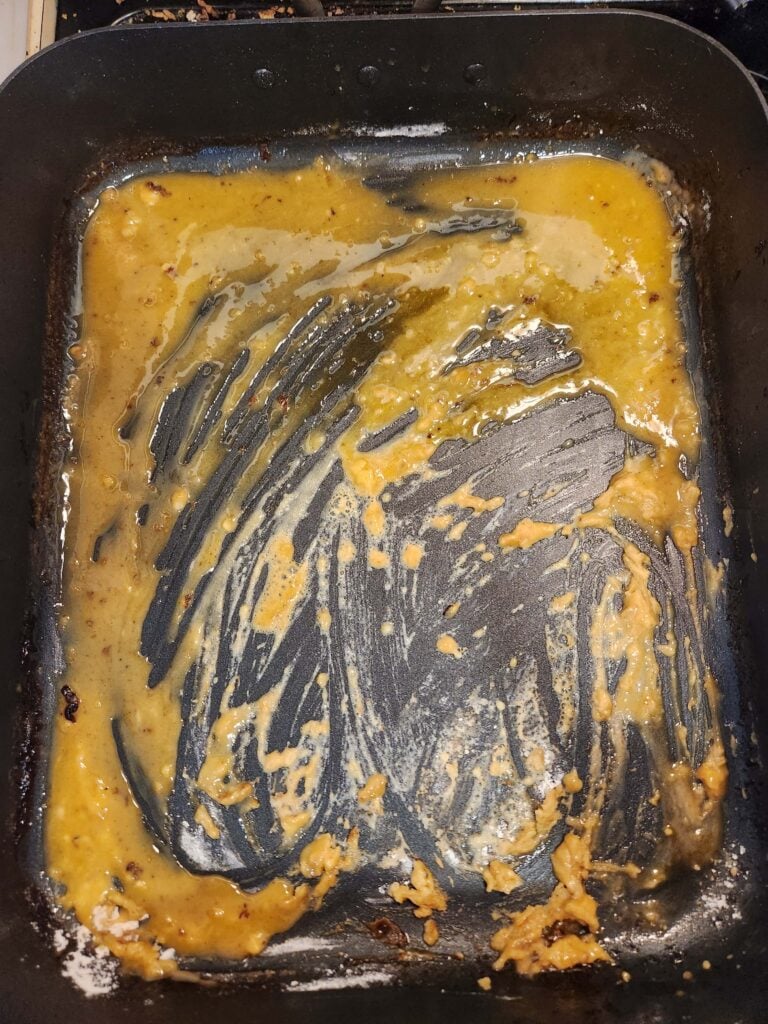
- Add the broth and turkey drippings: Slowly pour in the low-sodium chicken broth, whisking quickly to incorporate it into the roux. Add about 1 cup of the separated turkey juices and continue whisking as the gravy warms and begins to thicken. Add more broth or turkey drippings as needed to reach your preferred consistency and flavor.
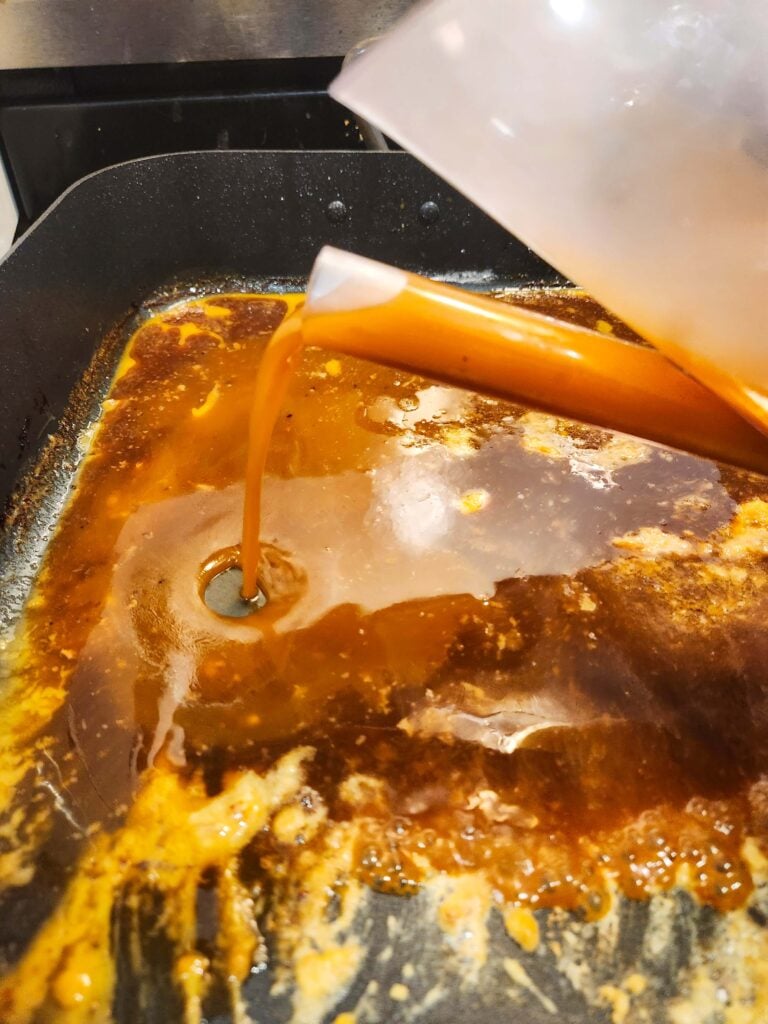
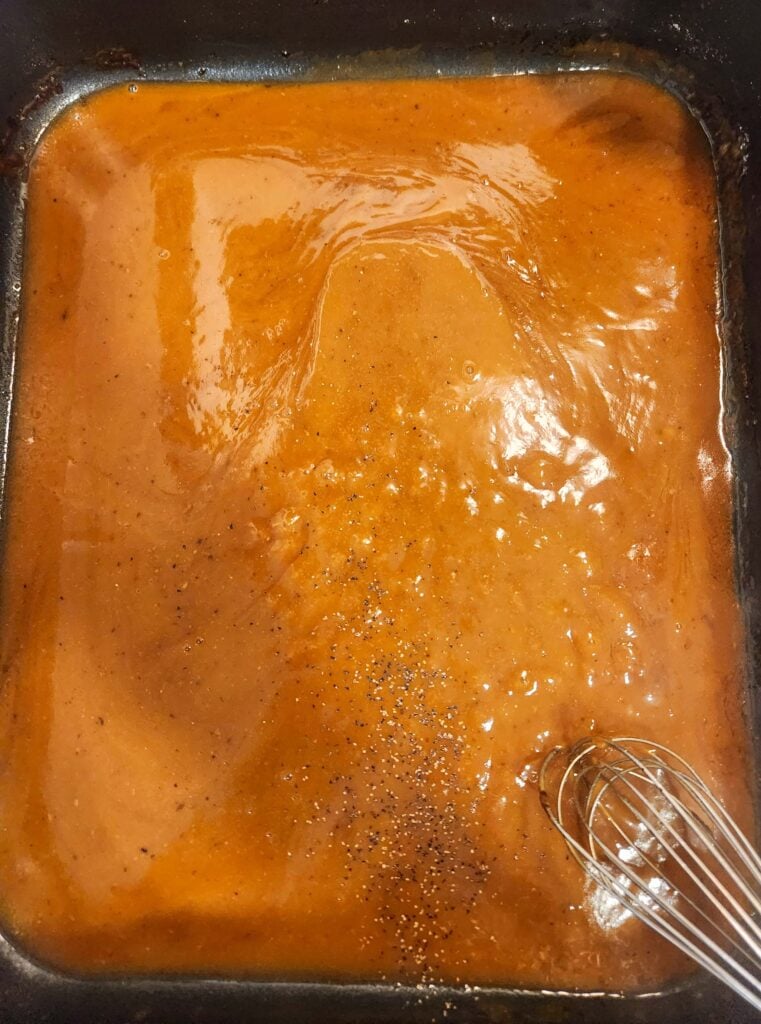
- Season and finish: Add plenty of freshly cracked black pepper and let the gravy simmer for several minutes. Taste before adding salt, since your turkey drippings may already be salty. For a little brightness, add a small squeeze of lemon juice or a dash of apple cider vinegar. Serve warm and make sure there’s plenty to go around!
Tips for Making Homemade Turkey Gravy
- Don’t discard the turkey fat: That reserved fat is what makes the roux especially flavorful. Save it after separating your drippings.
- Keep the browned bits: Those roasted bits stuck to the bottom of the pan are full of flavor. Scrape them into the roux as you whisk.
- Use low-sodium broth: This gives you more control over the salt, especially when the turkey drippings are already seasoned.
- Add liquid gradually: Start with the broth and turkey juices, then adjust with more broth until the gravy reaches your preferred consistency.
- Be generous with the pepper: Freshly cracked black pepper gives homemade turkey gravy a wonderful savory bite.
- Taste before salting: Brined and self-basting turkeys can leave behind salty drippings. Always taste first.
- No roasting pan room? Transfer the reserved turkey fat and browned bits to a large saucepan or pot. You don’t have to fight for every inch of stovetop space on Thanksgiving.
A Fat Separator Is Worth Every Penny!
Let me tell you, my $19.99 fat separator is one of the best kitchen purchases I’ve made all year. Even if you only use it once a year for Thanksgiving gravy, it’s worth having. But honestly, I’ve found myself reaching for it much more often than that!
Pour your turkey drippings into the separator and pop it in the refrigerator for a little while. The fat separates from the flavorful juices, making it incredibly easy to remove and save the fat without all the fuss. No spooning, skimming, or trying to guess where the fat ends and the juices begin.
I’ve also used mine with slow cooker recipes to remove excess fat from meat after it’s cooked down. It’s especially handy when you’ve got a pot full of flavorful cooking liquid and don’t want all that extra grease in your finished dish.
And don’t throw that turkey fat away! You can use it along with butter when making your roux, or use it in place of butter altogether. It adds another layer of roasted turkey flavor to your gravy.
Even if you only pull it out once a year, I think it’s worth every penny. But once you start finding other uses for it, you’ll wonder how you managed without one!
No Fat Separator? No Problem!
If you don’t have a fat separator, you can still make homemade turkey gravy without one. Pour the turkey drippings into a heat-safe measuring cup or bowl and let them sit for 10–15 minutes. The fat will naturally rise to the top while the flavorful turkey juices settle underneath.
Once the layers separate, carefully spoon or ladle the fat off the top and set it aside. You can also refrigerate the drippings until the fat firms up, making it even easier to lift off. Save both the fat and the juices because you’ll use them in different parts of the gravy.
Can You Make Turkey Gravy Ahead of Time?
Absolutely! You can prepare homemade turkey gravy up to 2 days ahead and keep it refrigerated, or freeze it for up to 3 months.
You can make the gravy base ahead of Thanksgiving and reheat it when you’re ready to serve. If you prepare the gravy before the turkey is roasted, use chicken broth or turkey stock as your base. Once the turkey is finished, you can add some of the separated, flavorful pan juices to finish the gravy.
Reheat refrigerated or thawed gravy thoroughly, whisking frequently. If it has thickened too much while chilling, add a little chicken broth to loosen it back up.
Frequently Asked Questions
- Can I make turkey gravy without pan drippings? Yes! Low-sodium chicken broth or turkey stock can be used as your base. For even more roasted turkey flavor, you can prepare a separate turkey stock ahead of time using turkey wings or a turkey neck. Pan drippings add wonderful flavor, but they’re not the only way to make homemade gravy.
- What if I don’t have enough turkey drippings? Don’t worry. That’s exactly why I keep low-sodium chicken broth on hand. Use the drippings you have and add broth until you have enough liquid and the flavor you want.
- How do I keep turkey gravy from getting lumpy? Whisk continuously as you add the broth to the roux. If you end up with a few lumps, whisk vigorously or pour the gravy through a fine-mesh strainer. An immersion blender can also help smooth things out.
- How do I fix gravy that’s too thick? Whisk in additional chicken broth a little at a time until it reaches your preferred consistency.
- How do I thicken turkey gravy if it’s too thin? Let it simmer a little longer first. If it still needs help, whisk 2–3 tablespoons of flour with enough cold water to make a smooth, pourable slurry. Slowly add it to the simmering gravy while whisking, then cook until thickened.
- How do I fix greasy turkey gravy? The easiest fix is separating the fat from the pan drippings before you start. If the finished gravy still has excess grease, let it settle briefly and skim the surface, or chill it so the fat solidifies and can be removed.
- What if my turkey gravy is too salty? Add low-sodium chicken broth a little at a time, tasting as you go. This is why I recommend holding off on adding salt until the gravy is finished.
- Can I use butter instead of turkey fat? Yes. Reserved turkey fat adds extra roasted flavor, but you can combine it with butter or use butter if you don’t have enough turkey fat available.
- Can I use ground black pepper instead of freshly cracked pepper? Of course! I love the flavor of freshly cracked pepper, but regular ground black pepper works perfectly well. Use what you have.
- Can I make turkey gravy in a saucepan instead of the roasting pan? Absolutely. You can transfer the reserved turkey fat and browned bits to a large saucepan or pot and make the roux there. It’s a handy option when you need the roasting pan out of the way or simply need more room on the stovetop.
- Why add lemon juice or apple cider vinegar to gravy? A tiny amount of acidity helps balance the richness of the turkey fat and drippings. Start with just a little, taste, and add more only if needed. You want brighter flavor, not sour gravy!
Your Gravy Color May Vary
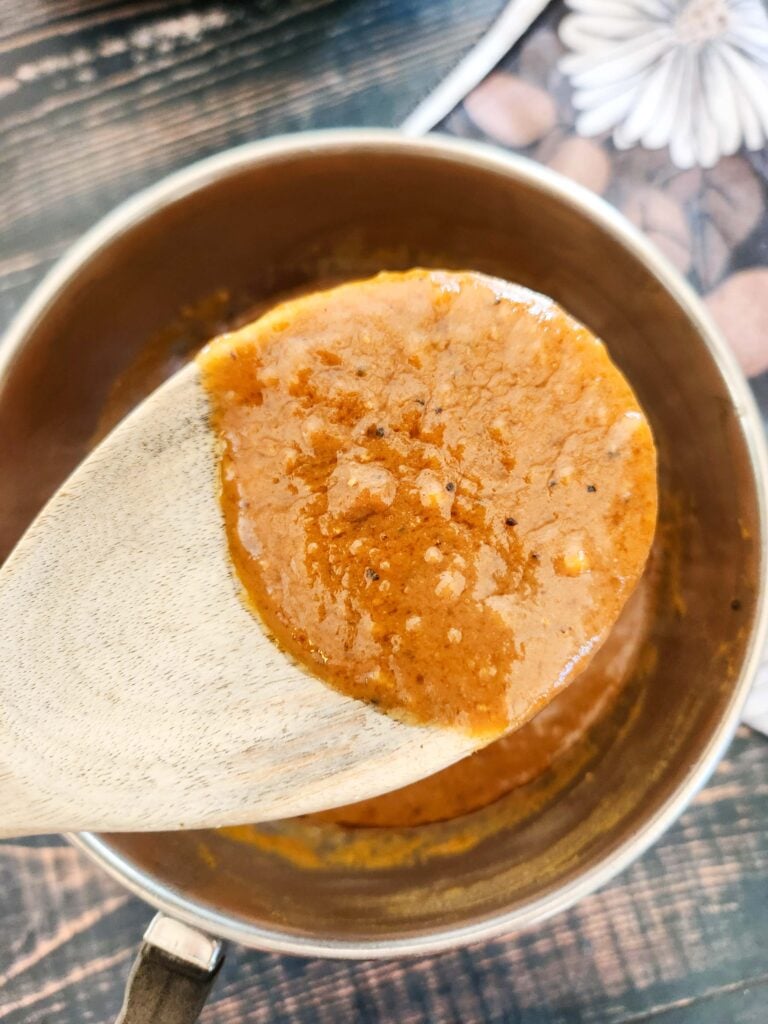
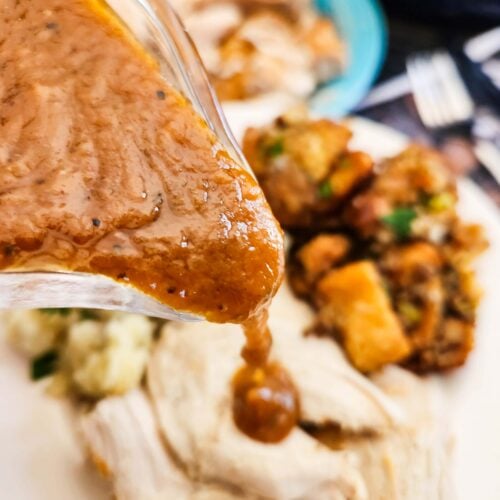
Don’t be surprised if your turkey gravy looks a little different from mine! The color will depend on how you season your turkey and what’s in those pan drippings. I use a dry brine that includes 1 tablespoon of smoked paprika, which gives my turkey (and the drippings) a deeper, darker color. Your gravy may be lighter or darker depending on your seasoning blend, and that’s perfectly fine. It’s all about that delicious flavor!
What to Serve with Homemade Turkey Gravy
This turkey drippings gravy recipe deserves a place right in the middle of your Thanksgiving table. Pour it over roasted turkey, mashed potatoes, stuffing, and just about anything else that needs a little extra love.
If you’re planning your holiday menu, be sure to check out more of my [Thanksgiving recipes] for side dishes, casseroles, and all the good stuff that makes the holiday dinner worth gathering around.
A Note From Heather
I’m going to say it: I love the turkey, but the gravy might be my favorite part of Thanksgiving dinner. Give me a plate of mashed potatoes, stuffing, and a generous pour of homemade gravy, and I’m a happy girl.
I always save those pan drippings because that’s where the real flavor is. And once you have a fat separator, making gravy becomes so much easier. Don’t rush the roux, taste as you go, and whatever you do, make enough gravy.
Trust me. Somebody is going back for seconds!
Real food, real life.
XOXO,
Heather ❤️
Turkey Gravy from Drippings (Easy Homemade Recipe)

Ingredients
- 3-4 tablespoons reserved turkey fat or a combination of turkey fat and butter
- 5-6 tablespoons all-purpose flour
- 1 cup separated turkey pan drippings fat removed
- 1 can low-sodium chicken broth plus more as needed
- Freshly cracked black pepper to taste
- Kosher salt to taste
- Optional: A small squeeze of lemon juice or dash of apple cider vinegar
Instructions
- Carefully pour the turkey pan drippings into a fat separator. Allow the fat to rise to the top, then separate and reserve both the turkey fat and flavorful juices.
- If you don't have a fat separator, pour the drippings into a heat-safe measuring cup or bowl. Let stand for 10–15 minutes until the fat rises to the top. Carefully skim off the fat and reserve it for the roux. Refrigerating the drippings until the fat firms up makes separation even easier.
- Leave the browned bits in the roasting pan. Place the pan over two stovetop burners on low heat, or transfer the browned bits to a large saucepan. Add 3–4 tablespoons of reserved turkey fat.
- Whisk in the flour, scraping up the browned bits. The mixture should form a thick, pasty roux. If it seems too dry, add another tablespoon of turkey fat. Cook over low heat for 4–5 minutes, whisking frequently.
- Slowly pour in the chicken broth while whisking quickly to incorporate it into the roux. Add about 1 cup of separated turkey drippings and continue whisking.
- Allow the gravy to simmer for several minutes, whisking as it thickens. Add additional chicken broth or turkey drippings as needed to reach your desired consistency and flavor.
- Season generously with black pepper. Taste before adding salt, since the turkey drippings may already be salty. Add a small squeeze of lemon juice or dash of apple cider vinegar, if desired. Serve warm.
Notes
Tips for Perfect Turkey Gravy
- Don’t discard the turkey fat: That reserved fat is what makes the roux especially flavorful. Save it after separating your drippings.
- Keep the browned bits: Those roasted bits stuck to the bottom of the pan are full of flavor. Scrape them into the roux as you whisk.
- Use low-sodium broth: This gives you more control over the salt, especially when the turkey drippings are already seasoned.
- Add liquid gradually: Start with the broth and turkey juices, then adjust with more broth until the gravy reaches your preferred consistency.
- Be generous with the pepper: Freshly cracked black pepper gives homemade turkey gravy a wonderful savory bite.
- Taste before salting: Brined and self-basting turkeys can leave behind salty drippings. Always taste first.
- No roasting pan room? Transfer the reserved turkey fat and browned bits to a large saucepan or pot. You don’t have to fight for every inch of stovetop space on Thanksgiving.


This homemade turkey gravy from drippings is a Thanksgiving staple in my kitchen. Made with real pan drippings, reserved turkey fat, and plenty of black pepper, it has all the rich roasted flavor you want in a traditional turkey gravy. I love using a fat separator to make the process easier, and a little squeeze of lemon juice or dash of apple cider vinegar can brighten everything up. Don’t rush it, taste as you go, and save those drippings!