

Homemade Thanksgiving Sausage Stuffing (with Sourdough Bread!)
Homemade Thanksgiving sausage stuffing made with hearty sourdough bread, savory sausage, butter, and classic herbs, baked with a golden, crispy top.
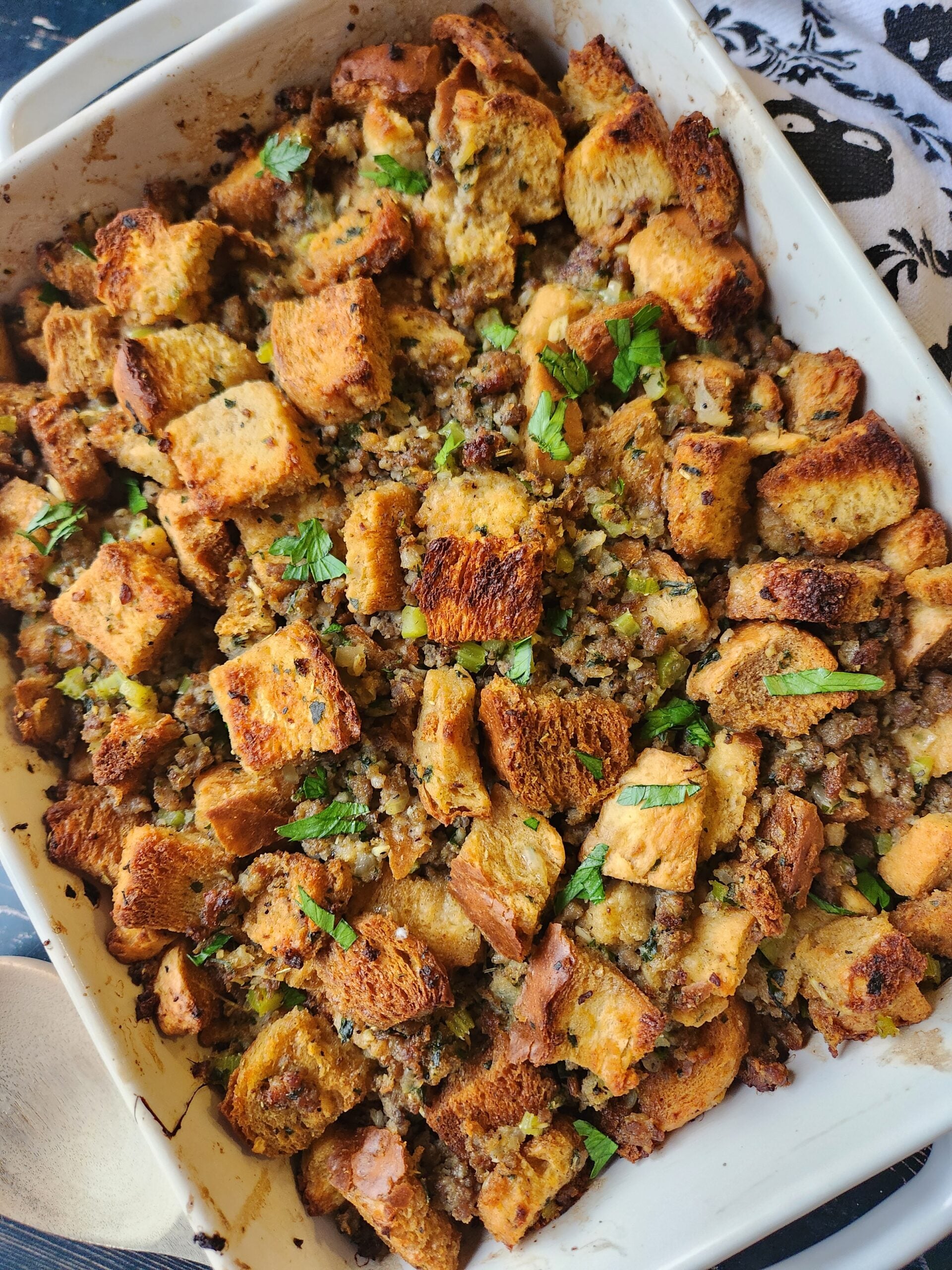
Homemade Thanksgiving Sausage Stuffing
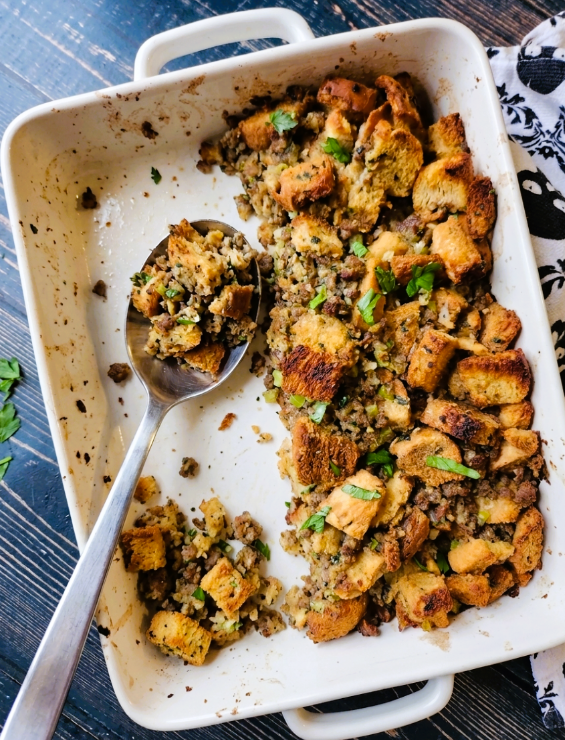
If there’s one Thanksgiving side dish that deserves a little extra attention, it’s stuffing. This homemade Thanksgiving sausage stuffing is made with hearty sourdough bread, savory breakfast sausage, plenty of butter, and a generous combination of classic herbs. It’s soft and flavorful in the middle, with a golden, buttery top and those crispy edges everyone wants to scoop up first.
I love using sourdough bread because it holds up beautifully to all that buttery goodness without turning into mush. And with sausage, celery, onion, garlic, and herbs in every bite, this is one side dish that can hold its own next to the turkey.
Looking for a different way to make stuffing? Try my Slow Cooker Sausage Stuffing or my Pepperidge Farm Stuffing for two more Thanksgiving favorites.
Why You’ll Love This Recipe
- Buttery and flavorful: Sausage, classic herbs, garlic, and butter give this stuffing plenty of flavor.
- Crispy on top: Baking uncovered for the second half of cooking gives you that golden, crunchy top.
- Your choice of herbs: Use fresh herbs, dried herbs, or a combination of both.
- Make-ahead friendly: Prepare it up to 48 hours ahead so there’s one less thing to worry about on Thanksgiving.
- Easy to customize: Use sage breakfast sausage or regular breakfast sausage, depending on what you have available.
Ingredients You’ll Need
- Bread: 16 ounces of fresh sourdough or another hearty bread, cut into cubes and dried. Sourdough is my favorite for this recipe.
- Breakfast sausage: 1 pound Jimmy Dean or an equivalent brand. Use sage sausage or regular breakfast sausage.
- Butter: 1 cup for sautéing the vegetables and blooming the herbs, plus approximately ¼ cup cut into pats for the top.
- Onion: 1 sweet onion, diced.
- Celery: 3 ribs, diced.
- Garlic: 4–5 cloves, minced.
- Chicken broth: 3 cups, added gradually as needed.
- Sage: 2 teaspoons dried or 2 tablespoons fresh, finely chopped.
- Thyme: 1 teaspoon dried or 1 tablespoon fresh.
- Rosemary: 1 teaspoon dried or 1 tablespoon fresh, finely chopped.
- Poultry seasoning: 1 teaspoon.
- Onion powder: 1 teaspoon.
- Garlic powder: 1 teaspoon.
- Salt: 1 teaspoon, adjusting to taste.
- Black pepper: 1 teaspoon.
- Sugar: A pinch.
- Better Than Bouillon: 1-2 teaspoon… optional but always recommended.
- Parsley: 2–4 tablespoons fresh, chopped, or 2–4 teaspoons dried.
Fresh Herbs vs. Dried Herbs
You can absolutely use fresh or dried herbs in this recipe. Don’t make an extra trip to the grocery store just because your recipe calls for fresh herbs. Your pantry has you covered!
| Herb | Dried | Fresh |
|---|---|---|
| Sage | 2 teaspoons | 2 tablespoons |
| Thyme | 1 teaspoon | 1 tablespoon |
| Rosemary | 1 teaspoon | 1 tablespoon |
| Parsley | 2–4 teaspoons | 2–4 tablespoons |
Dried herbs are more concentrated than fresh herbs, so you’ll generally use about one-third as much dried as fresh. Both work beautifully in this stuffing.
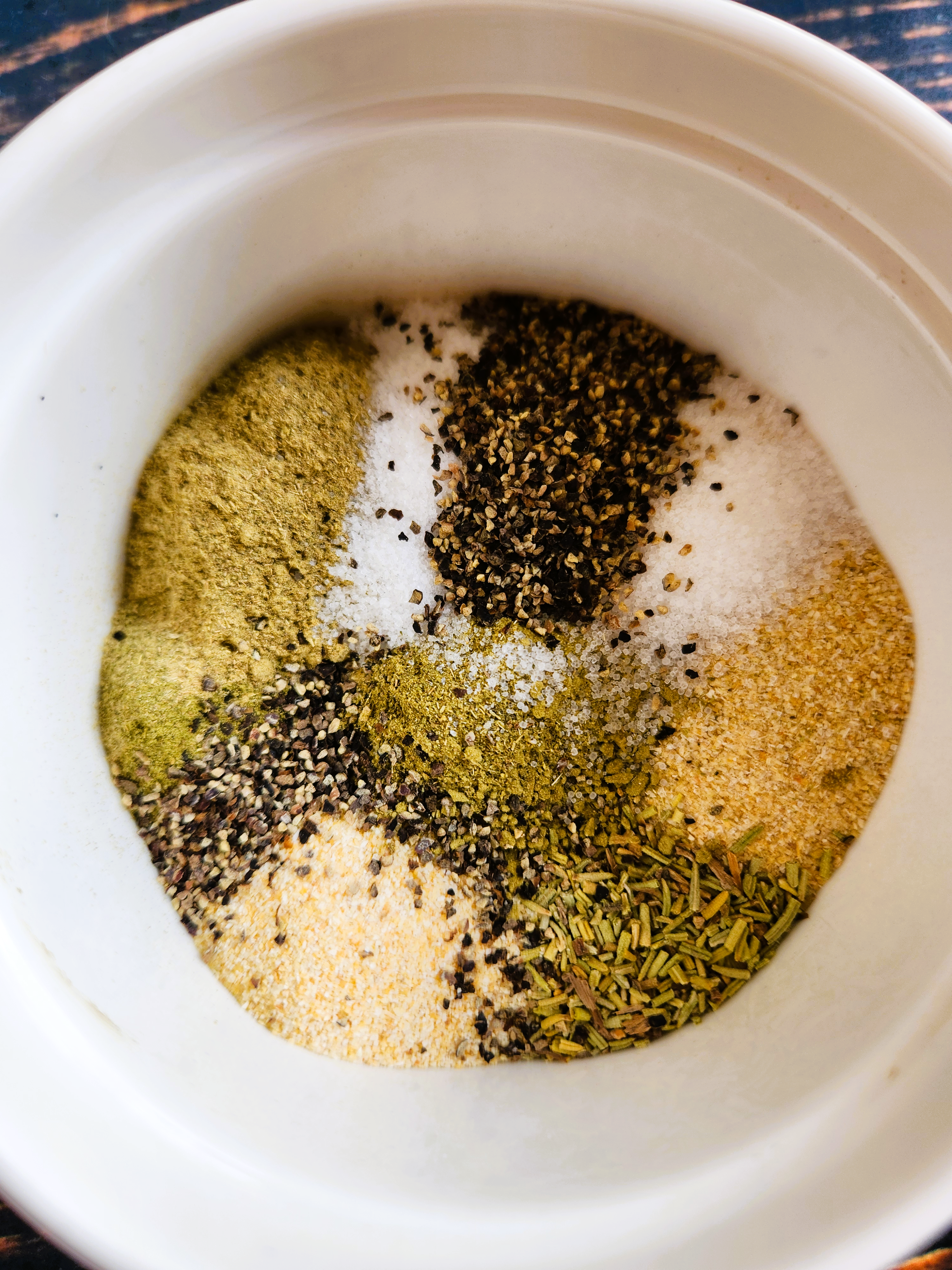
A little flavor tip: Bloom your herbs in the melted butter, whether you’re using fresh or dried. Warming them in the butter helps release their aromatic oils and spreads that flavor throughout the dish. Add the parsley near the end when tossing everything together.
What Bread Is Best for Homemade Stuffing?
The bread you choose makes a difference in the finished texture. You want something sturdy enough to absorb the broth and butter without completely falling apart.
- Sourdough: My favorite! It has a slightly tangy flavor and a sturdy texture that holds up beautifully to the broth and butter.
- Hearty white bread: A great neutral option that lets the sausage and herbs shine. Choose a sturdy loaf rather than very soft sandwich bread.
- Challah or brioche: These make a richer, slightly sweeter stuffing. They’re delicious, but the sweetness may compete a little with the savory herbs.
- Cornbread: A good choice if you prefer a sweeter, Southern-style stuffing. It will have a softer, more crumbly texture.
- French bread or baguette: These can work well, especially when the crumb is fairly tight. Very open bread with a thick, hard crust may absorb broth differently.
I use sourdough because I love the flavor and texture it brings to this recipe.
How to Dry Bread for Stuffing
Fresh bread needs to be dried before you make stuffing. Otherwise, it can absorb too much liquid and turn mushy instead of giving you those lovely tender pieces with a little texture.
- Cut the bread into approximately ¾- to 1-inch cubes.
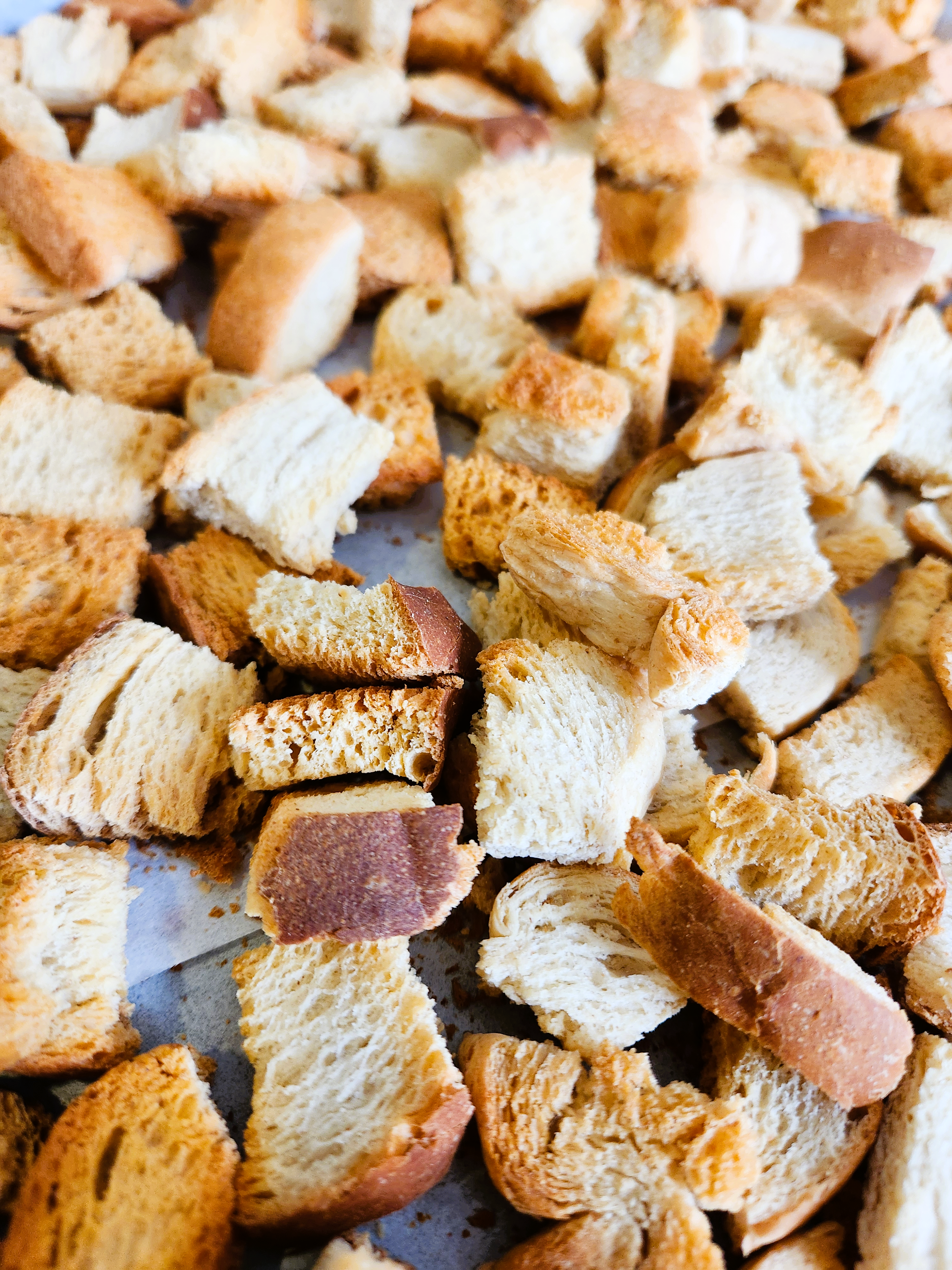
- Spread the cubes in a single layer on a baking sheet.
- Bake at 275°F for approximately 45 minutes, checking periodically. Every oven is a little different, so keep an eye on them.
- The bread should feel dry and stale, not toasted or browned.
- Remove from the oven and allow the bread cubes to cool completely before using.
You can do this the day before and store the cooled bread cubes in an airtight container at room temperature.
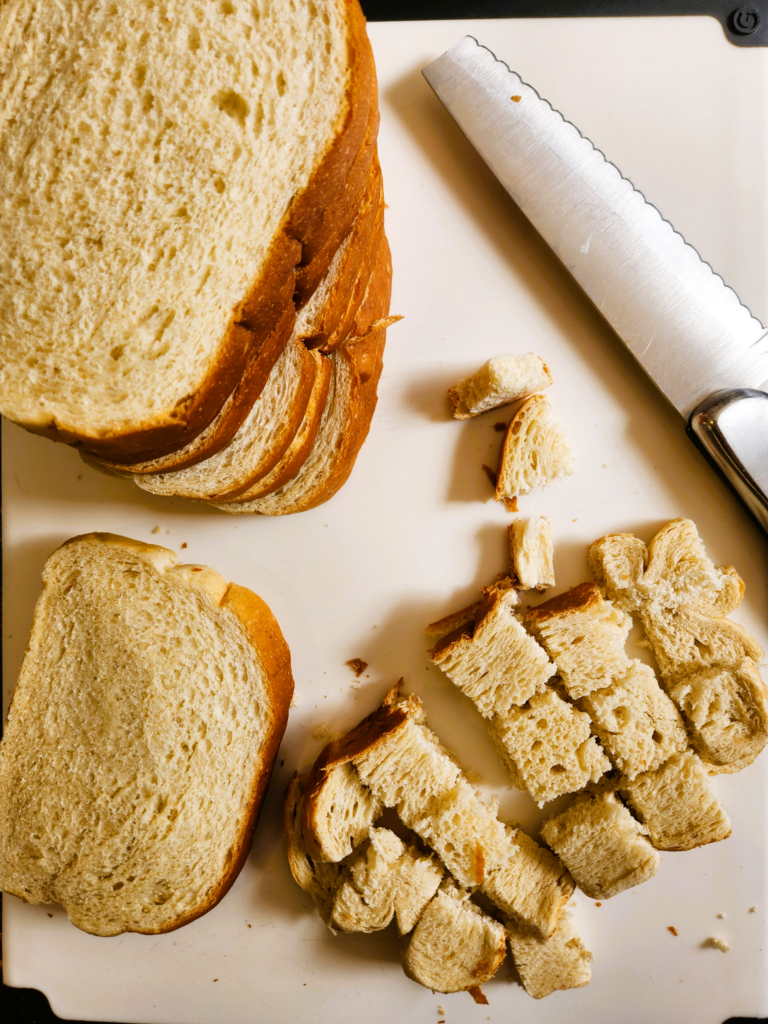
Short on time? You can also leave cubed bread uncovered on the counter for 2–3 days to dry naturally.
How to Make Homemade Thanksgiving Sausage Stuffing
- Prepare the bread. Cut your bread into ¾- to 1-inch cubes and dry according to the instructions above. Allow it to cool completely.
- Brown the sausage. In a large skillet over medium heat, cook the breakfast sausage until browned and cooked through, breaking it into small pieces as it cooks. Remove the sausage from the skillet and set aside.
- Bloom the Herbs. Add 1 cup of butter to the same skillet. Add the sage, thyme, rosemary, poultry seasoning, onion powder, garlic powder, salt, pepper, Better Than Bouillon, and pinch of sugar. Stir well and let the herbs warm in the melted butter for approximately 30–60 seconds. This helps release their aromatic oils and builds flavor right into the butter.
- Sauté the vegetables. Add the diced onion and celery the butter and herbs. Cook until softened, stirring occasionally. Add the minced garlic and cook for another minute.
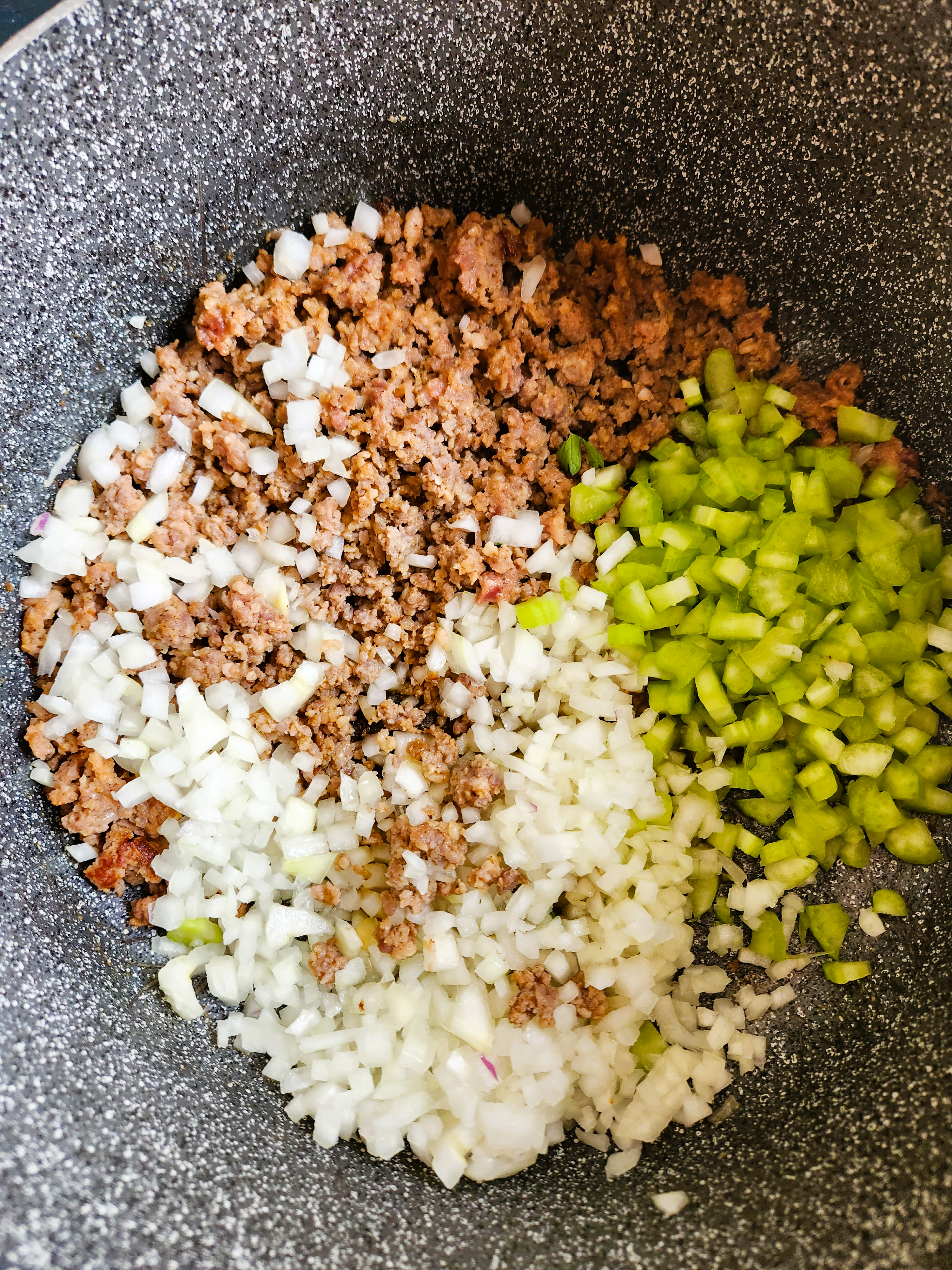
- Combine the stuffing. Add the dried bread cubes to a large mixing bowl. Pour the buttery vegetable and herb mixture over the bread. Add the cooked sausage and fresh parsley, then toss gently to distribute everything evenly.
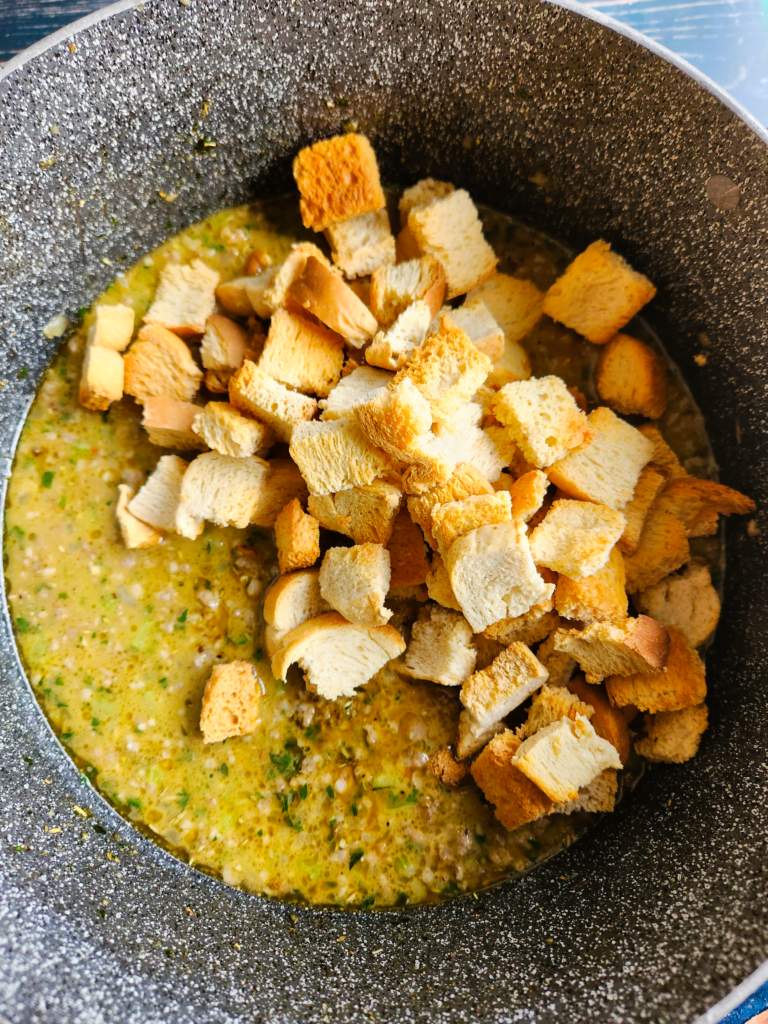
- Add the broth. Slowly pour in the chicken broth, tossing as you go. Start with the 3 cups called for, but add it gradually and allow the bread time to absorb the liquid. You want the bread moist throughout, not swimming in broth. Different breads absorb liquid differently, so you may not need every drop.
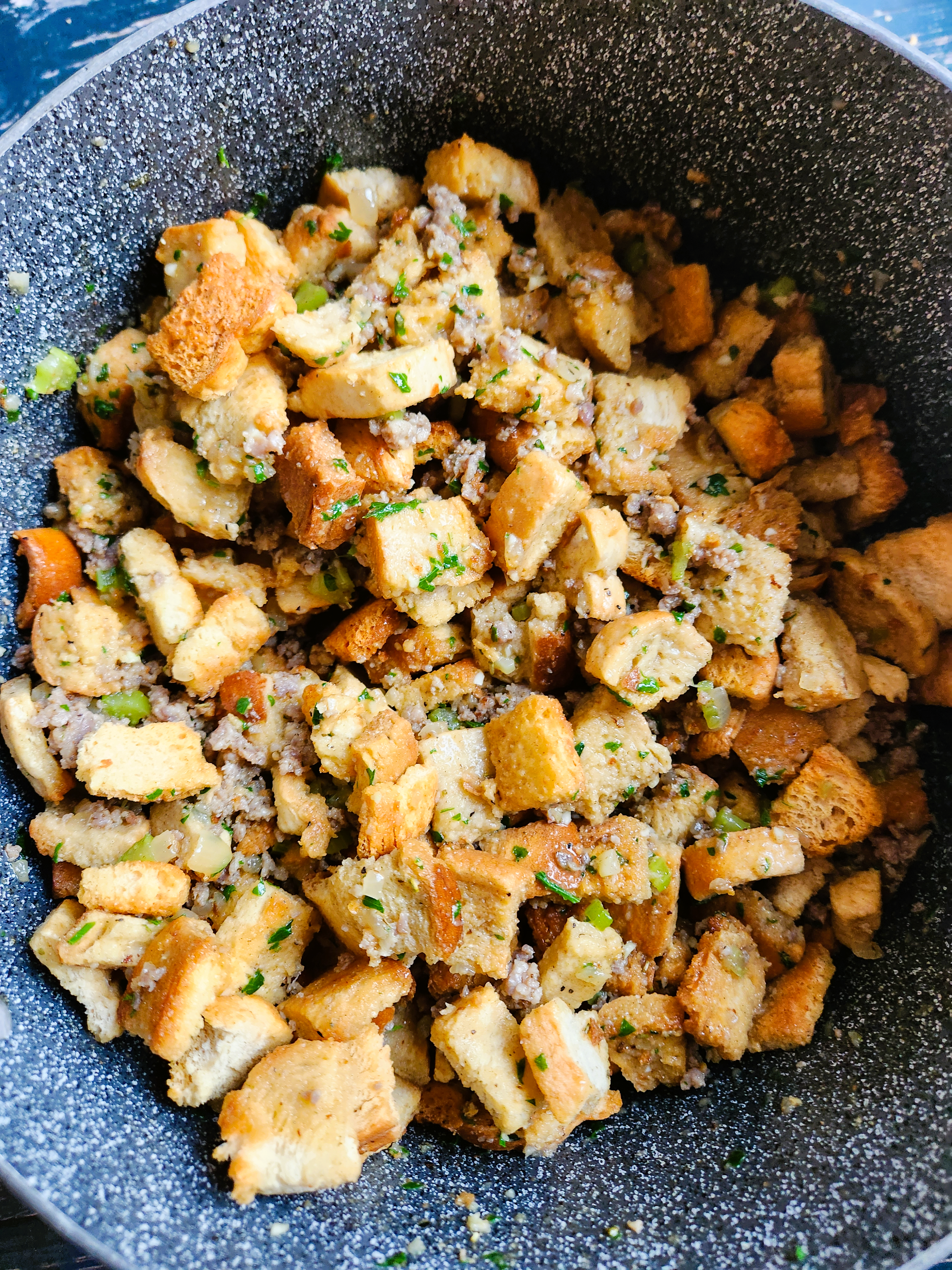
- Transfer to the baking dish. Spoon the stuffing into a greased 8 x 13-inch baking dish. Spread it evenly without packing it down tightly. Dot the top with approximately ¼ cup of additional butter, cut into small pats.
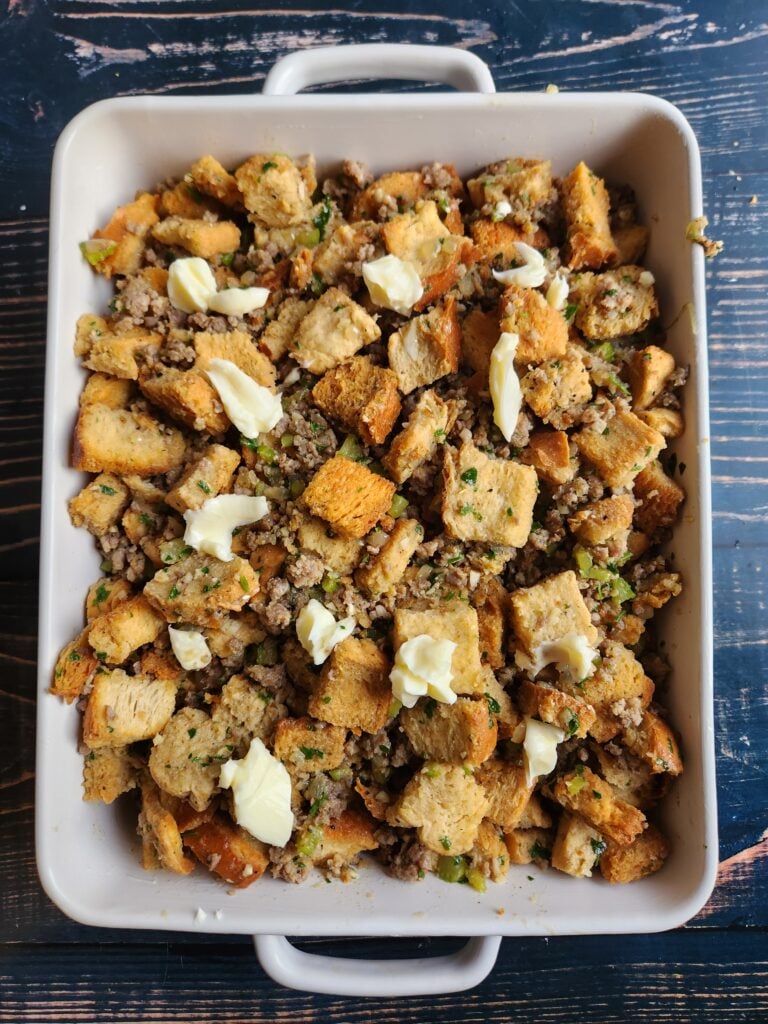
- Bake. Cover the dish with foil and bake at 350°F for approximately 20 minutes. Remove the foil and continue baking for another 15–25 minutes, or until the top is golden and crisp and the center is heated through.
- Rest and serve. Let the stuffing rest for a few minutes before serving. Then get in there and claim those crispy edges before somebody else does.
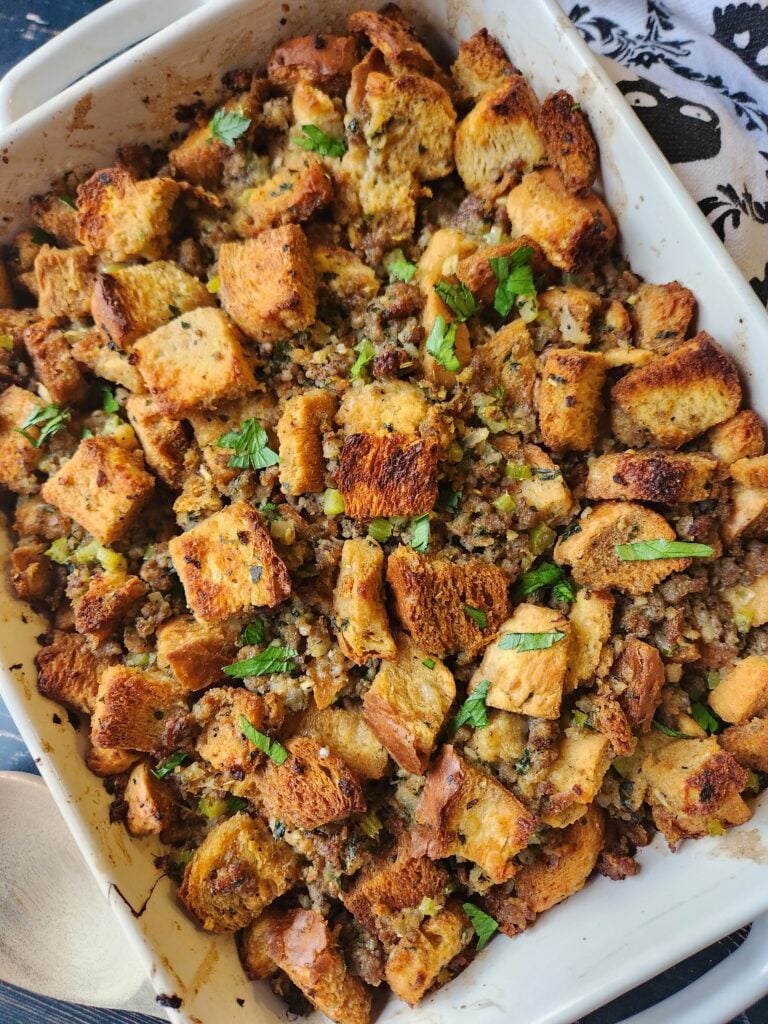
The Best Golden, Crunchy Edges
Let’s be honest: the crispy edges are one of the best parts of homemade stuffing. The top should be golden, the corners should have a little crunch, and the middle should stay soft and flavorful.
A few things help make that happen:
- Don’t pack the stuffing tightly. Spoon it into the baking dish and spread it gently. Packing it down can make the finished stuffing dense.
- Use butter on top. Those extra pats of butter melt into the bread as it bakes and help create a golden, flavorful crust.
- Cover first, uncover last. Covering the stuffing for the first half helps heat the center without drying it out. Removing the foil for the second half lets the top brown.
- Give it enough time uncovered. If the top isn’t as golden as you’d like, give it a few additional minutes. Keep an eye on it so it doesn’t dry out.
Helpful Tips
- Use a mini food processor: This is one of my favorite shortcuts. A mini food processor makes quick work of chopping the onion, celery, and garlic. Cut everything into manageable chunks and pulse until finely chopped. Just don’t over-process into a puree. We want diced vegetables, not Thanksgiving smoothie.
- Bloom your herbs in the butter: Don’t skip this step! Warming the fresh or dried herbs in the melted butter helps release their flavor and distributes it throughout the stuffing.
- Add broth gradually: Bread absorbs liquid differently depending on the type and how dry it is. Add the broth slowly and give the bread a chance to soak it up before adding more.
- Don’t use all the broth just because the recipe lists it: The goal is moist bread cubes, not soggy stuffing.
- Use the sausage you like: Jimmy Dean sage sausage adds a little extra traditional herb flavor, but regular breakfast sausage works just as well.
- Adjust the baking time if needed: If you’re baking at 325°F instead of 350°F, plan on approximately 20 additional minutes, checking that the center is heated through.
- Let the bread cool completely: Warm bread can absorb the broth differently and make it harder to judge the moisture level.
Frequently Asked Questions
- Can I use fresh or dried herbs? Absolutely! Both work. Use the measurements listed in the ingredient section and bloom the herbs in the melted butter to bring out their flavor.
- Can I use store-bought bread cubes? Yes. You can use packaged dried bread cubes if you prefer. They may absorb more broth than homemade dried bread, so add the liquid gradually. You might also enjoy my [Pepperidge Farm Stuffing] recipe, which uses packaged bread cubes.
- Can I use regular breakfast sausage instead of sage sausage? Yes! Either sage breakfast sausage or regular breakfast sausage works. Use whichever you prefer or already have in the refrigerator.
- Do I need to add eggs to stuffing? No. This recipe doesn’t use eggs. The bread, butter, broth, and sausage create a moist stuffing without needing eggs to bind everything together.
- Why do I need to dry the bread first? Dry bread absorbs the broth and butter without becoming mushy. It also helps the stuffing keep some texture instead of turning into a soggy casserole.
- Can I make this stuffing without sourdough? Definitely. Hearty white bread, French bread, challah, brioche, and cornbread can all work. Just keep in mind that different breads absorb liquid differently.
- Can I prepare stuffing ahead of time? Yes! Assemble the stuffing, transfer it to your baking dish, cover, and refrigerate for up to 48 hours before baking. See the make-ahead instructions below.
- Can I cook this stuffing inside the turkey? Yes, but follow the food-safety instructions below. The stuffing must reach an internal temperature of 165°F.
- How do I keep stuffing from drying out? Add enough broth to moisten the bread, cover the dish for the first half of baking, and uncover it for the remaining time to brown the top.
Make-Ahead Instructions
Thanksgiving is busy enough without trying to do every single thing on the same day. Thankfully, you can prepare this sausage stuffing ahead of time.
- Prepare the stuffing according to the recipe, including adding the broth.
- Transfer it to a greased 8 x 13-inch baking dish.
- Cover tightly and refrigerate for up to 48 hours.
- Remove the dish from the refrigerator about 30 minutes before baking.
- Bake at 350°F, adding approximately 10–15 minutes to the baking time as needed because the stuffing is starting out cold.
Keep the dish covered for the first half of baking, then uncover it to brown the top. Always check that the center reaches 165°F before serving.
Can You Stuff a Turkey With This Recipe?
Yes! This stuffing can also be used to stuff a turkey.
If you’re planning to cook it inside your turkey, prepare the stuffing as directed and allow it to cool completely in the refrigerator for at least 45 minutes. Stuff the turkey just before cooking, rather than preparing and stuffing it ahead of time.
For food safety, the center of the stuffing inside the turkey must reach 165°F. Check the temperature with a food thermometer before serving. If the turkey is finished before the stuffing reaches that temperature, remove the stuffing and continue cooking it separately until it is safe to eat.
Storing and Reheating Leftover Stuffing
- Refrigerator: Store leftover stuffing in an airtight container in the refrigerator for up to 3–4 days.
- Reheating: Place leftovers in an oven-safe dish, add a small splash of chicken broth if needed, cover with foil, and reheat at 325°F until heated through. Remove the foil toward the end if you’d like to crisp up the top again.
- Microwave: Individual portions can be reheated in the microwave until hot throughout.
- Freezing: Store cooled stuffing in an airtight freezer-safe container for up to 2–3 months. Thaw overnight in the refrigerator before reheating.
What to Serve With Thanksgiving Sausage Stuffing
Stuffing might be one of my favorite Thanksgiving side dishes, but it certainly doesn’t have to sit on the table by itself! Whether you’re planning a traditional Thanksgiving dinner or adding a few new favorites to the menu, here are some delicious recipes to serve alongside this homemade sausage stuffing.
- Slow Cooker Turkey: You can’t go wrong with a classic Thanksgiving turkey. The savory sausage and herbs in this stuffing pair beautifully with roasted turkey and gravy.
- Homemade Turkey Gravy: A generous spoonful of rich, homemade gravy over stuffing is pretty much mandatory at my Thanksgiving table.
- Mashed Potatoes: Creamy mashed potatoes are a Thanksgiving staple, especially when there’s plenty of gravy involved.
- Green Bean Casserole: A classic holiday side dish that brings a little creaminess and crunch to the dinner table.
- Sweet Potato Casserole: A sweet and savory side dish that balances all those buttery, herb-filled flavors.
- Cranberry Sauce: A little tartness is always welcome alongside a rich Thanksgiving dinner.
- Dinner Rolls: Because apparently there is no such thing as too many carbohydrates on Thanksgiving. Pass the butter!
- Pecan Pie: Finish the meal with a classic Thanksgiving dessert. There’s always room for pie.
Whether you’re cooking for a big family gathering or keeping Thanksgiving dinner a little smaller, these recipes will help you put together a holiday meal everyone looks forward to.
A Note From Heather
I like a good Thanksgiving side dish, but I’m not interested in spending the entire holiday in the kitchen making one. This stuffing is worth a little prep work, especially when you can dry the bread the day before and get a head start.
And let’s be honest, the crispy edges are not negotiable. I want the golden, buttery pieces around the sides, the top that’s just a little crunchy, and the soft, flavorful stuffing underneath. If someone wants to scoop out the middle, that’s fine. I’ll be over here claiming the corners.
Because Thanksgiving is about family, good food, and making sure you get your favorite part before somebody else does.
Real food for real life.
Enjoy ♥ Heather
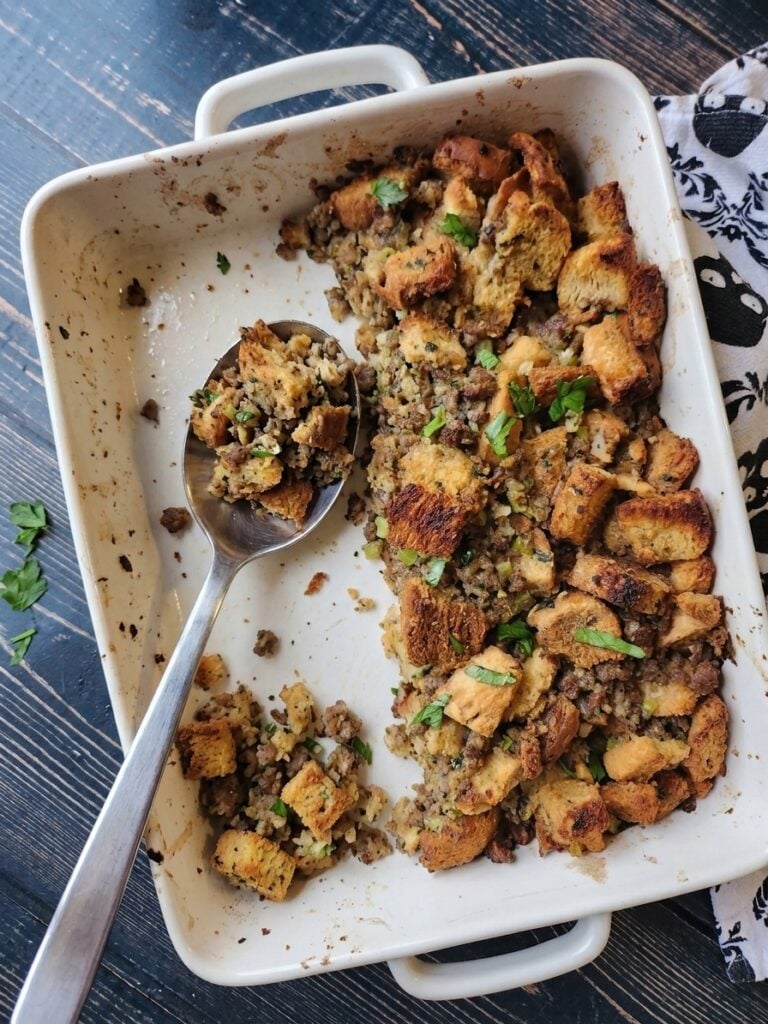
Homemade Thanksgiving Sausage Stuffing (with Sourdough Bread!)

Ingredients
- 16 ounces sourdough or other hearty bread cut into ¾- to 1-inch cubes and dried
- 1 pound Jimmy Dean or equivalent sage or regular breakfast sausage
- 1 cup butter
- ¼ cup additional butter, cut into pats for topping
- 1 sweet onion diced
- 3 ribs celery diced
- 4-5 garlic cloves minced
- 3 cups chicken broth added gradually as needed
- 2 teaspoons dried sage or 2 tablespoons fresh sage finely chopped
- 1 teaspoon dried thyme or 1 tablespoon fresh thyme leaves
- 1 teaspoon dried rosemary or 1 tablespoon fresh rosemary finely chopped
- 1 teaspoon poultry seasoning
- 1 teaspoon onion powder
- 1 teaspoon garlic powder
- 1 teaspoon salt
- 1 teaspoon black pepper
- 1-2 teaspoons Better Than Bouillon optional but recommended
- Pinch of sugar
- 2-4 tablespoons fresh parsley chopped, or 2–4 teaspoons dried parsley
Instructions
- Dry the bread: Cut bread into ¾- to 1-inch cubes. Spread in a single layer on a baking sheet and bake at 275°F for approximately 45 minutes, checking periodically. The bread should be dry and stale but not browned or toasted. Cool completely before using.
- Brown the sausage: In a large skillet over medium heat, cook the breakfast sausage until browned and cooked through, breaking it into small pieces. Remove from the skillet and set aside.
- Bloom the herbs: Add 1 cup butter to the same skillet. Once melted, add the sage, thyme, rosemary, poultry seasoning, onion powder, garlic powder, salt, black pepper, Better Than Bouillon, and pinch of sugar. Stir and allow the herbs to warm in the melted butter for 30–60 seconds, stirring frequently.
- Sauté the vegetables: Add the diced onion and celery to the herb butter in the skillet. Cook until softened. Add the minced garlic and cook for another minute.
- Combine the ingredients: Place the dried bread cubes in a large mixing bowl. Pour the buttery vegetable and herb mixture over the bread. Add the cooked sausage and parsley. Toss gently to distribute everything evenly.
- Add the broth: Gradually pour in the chicken broth, tossing as you go. Allow the bread to absorb the liquid before adding more. The bread should be moist throughout but not soggy. You may not need all the broth, depending on the bread.
- Prepare the baking dish: Transfer the stuffing to a greased 8 x 13-inch baking dish. Spread evenly without packing it down tightly. Dot the top with approximately ¼ cup additional butter, cut into small pats.
- Bake: Cover with foil and bake at 350°F for approximately 20 minutes. Remove the foil and bake another 15–25 minutes, until the top is golden and crispy and the center is heated through.
- Rest and serve: Allow the stuffing to rest for a few minutes before serving.
Notes
Recipe Notes
- Bread: Sourdough is my favorite for this recipe because it has a sturdy texture and slightly tangy flavor. Other hearty breads work, too.
- Fresh or dried herbs: Both work beautifully. Use approximately one-third as much dried herb as fresh. Bloom either version in the melted butter to release its flavor.
- Vegetable prep: A mini food processor makes quick work of chopping the onion, celery, and garlic. Pulse until finely chopped, but don’t turn everything into a puree.
- Broth: Add gradually. Different breads absorb different amounts of liquid, so don’t force all 3 cups into the recipe if the bread is already moist.
- Make ahead: Assemble the stuffing, transfer to the baking dish, cover, and refrigerate for up to 48 hours. Remove from the refrigerator about 30 minutes before baking. Add approximately 10–15 minutes to the baking time as needed.
- Turkey stuffing: If using inside a turkey, cool the prepared stuffing completely in the refrigerator for at least 45 minutes. Stuff the turkey just before cooking. The center of the stuffing must reach 165°F.
- Storage: Refrigerate leftovers in an airtight container for 3–4 days. Freeze for 2–3 months.
- Reheating: Reheat covered at 325°F with a splash of broth if needed. Uncover toward the end to crisp the top again.
Helpful Tips
- Use a mini food processor: This is one of my favorite shortcuts. A mini food processor makes quick work of chopping the onion, celery, and garlic. Cut everything into manageable chunks and pulse until finely chopped. Just don’t over-process into a puree. We want diced vegetables, not Thanksgiving smoothie.
- Bloom your herbs in the butter: Don’t skip this step! Warming the fresh or dried herbs in the melted butter helps release their flavor and distributes it throughout the stuffing.
- Add broth gradually: Bread absorbs liquid differently depending on the type and how dry it is. Add the broth slowly and give the bread a chance to soak it up before adding more.
- Don’t use all the broth just because the recipe lists it: The goal is moist bread cubes, not soggy stuffing.
- Use the sausage you like: Jimmy Dean sage sausage adds a little extra traditional herb flavor, but regular breakfast sausage works just as well.
- Adjust the baking time if needed: If you’re baking at 325°F instead of 350°F, plan on approximately 20 additional minutes, checking that the center is heated through.
- Let the bread cool completely: Warm bread can absorb the broth differently and make it harder to judge the moisture level.


This homemade sausage stuffing is loaded with savory sausage, buttery herbs, and all those crispy golden edges everyone fights over. I’ve included plenty of tips to help you get it just right, because nobody wants soggy stuffing on Thanksgiving. And yes, I’m absolutely claiming the corner pieces!