

Easy Thanksgiving Sausage Stuffing Recipe
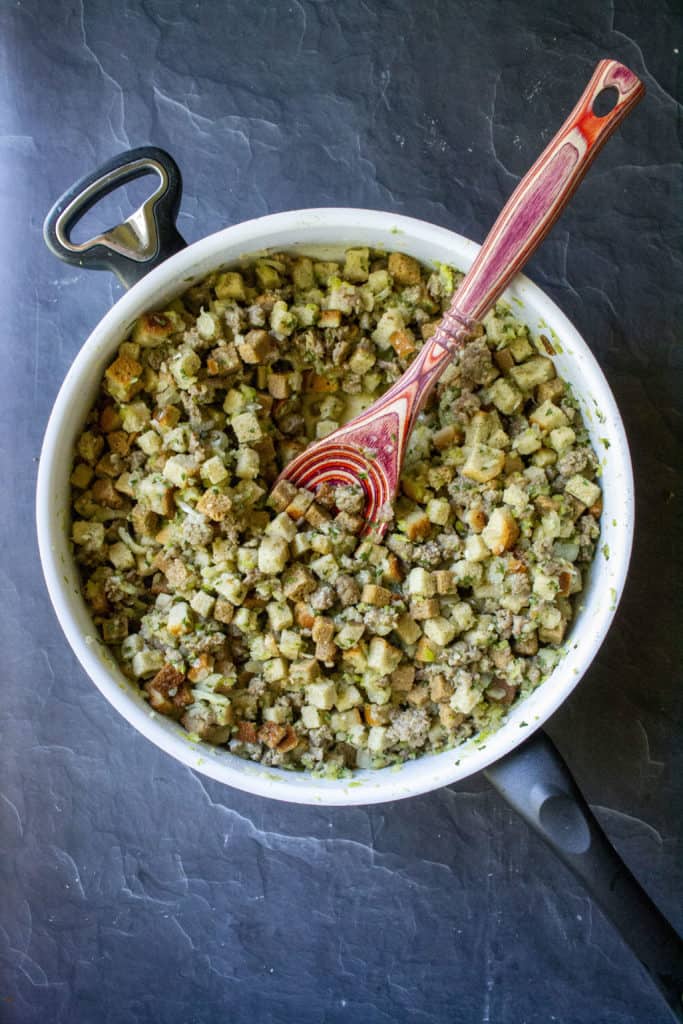
This easy Thanksgiving stuffing recipe combines savory pork sausage, fresh sage, parsley, and vegetables with tender bread cubes and a golden, crispy top.

Traditional Sausage and Herb Stuffing
This traditional sausage and herb stuffing is loaded with savory pork sausage, fresh sage, parsley, onion, and celery, all baked with seasoned bread cubes until the center is moist and the top is golden and crispy. It’s an easy Thanksgiving stuffing recipe that belongs right alongside your turkey, mashed potatoes, gravy, and all those other holiday favorites.
The secret is cooking the vegetables in the sausage drippings, adding just enough chicken broth to moisten the bread, and uncovering the casserole for the last 10 minutes so the top gets beautifully golden.
Best of all, this easy stuffing recipe uses store-bought stuffing cubes, so there’s no need to spend extra time cutting and drying bread. You can even assemble it ahead of time, which is always a win when you’re trying to get Thanksgiving dinner on the table without losing your mind.
Why You’ll Love This Sausage Stuffing Recipe
- Classic Thanksgiving flavor: Savory pork sausage, fresh sage, parsley, and poultry seasoning give this stuffing its traditional holiday flavor.
- Easy to make: Store-bought stuffing cubes save time without sacrificing that familiar homemade stuffing texture.
- Moist inside, crispy on top: Baking the stuffing covered first and uncovered at the end helps create a tender center with a golden top.
- Simple ingredients: Everything comes from an ordinary grocery store, and you don’t need special equipment.
- Make-ahead friendly: Prepare the casserole in advance so there’s one less thing to worry about on Thanksgiving Day.
- Easy to customize: Add apples, dried cranberries, or nuts if you want to give this traditional pork stuffing recipe your own twist.
Ingredients You’ll Need
- Ground pork sausage: One pound of ground pork sausage gives this stuffing its savory flavor. Sage-seasoned sausage is especially good here, but regular ground pork sausage works, too.
- Butter: Adds richness and helps soften the vegetables.
- Sweet onion: Brings a little natural sweetness and plenty of flavor.
- Celery: Provides the classic flavor and texture you’d expect in traditional stuffing.
- Fresh sage: One of the signature flavors of Thanksgiving stuffing, fresh sage gives the dish its fragrant, savory taste.
- Garlic: Adds another layer of flavor without overpowering the herbs.
- Store-bought stuffing cubes: A 14-ounce package makes this recipe easy and convenient. Use plain or seasoned bread cubes, adjusting the added seasonings if your cubes are already well seasoned.
- Chicken broth: Moistens the bread cubes and brings everything together. Start with the recipe amount and add more only if needed.
- Egg: Helps bind the stuffing so it holds together when served.
- Fresh parsley: Adds a fresh, herby finish. Reserve some for sprinkling over the top before serving.
- Poultry seasoning: Adds classic holiday flavor.
- Garlic powder and onion powder: Round out the savory seasoning.
- Salt and black pepper: Bring all the flavors together.
How to Make Traditional Sausage and Herb Stuffing
- Step 1: Prepare the oven and baking dish. Preheat the oven to 350°F. Butter a 9-by-13-inch casserole dish and set it aside.
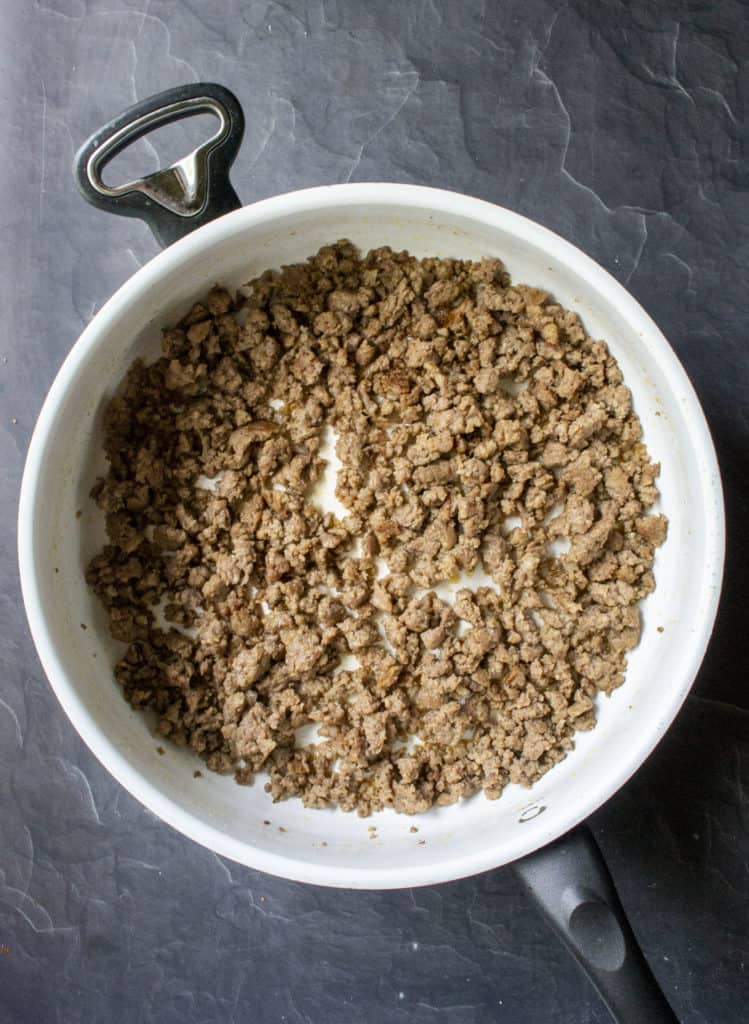
- Step 2: Brown the sausage. Add the ground pork sausage to a large skillet over medium-high heat. Cook for about 5–6 minutes, breaking it into small crumbles with a spatula, until it is no longer pink and is cooked through.
- Step 3: Cook the vegetables and herbs. Add the butter, diced onion, celery, and fresh sage to the skillet. Cook for 3–4 minutes, until the vegetables begin to soften. Add the minced garlic and cook for another 30 seconds, stirring so it doesn’t burn.
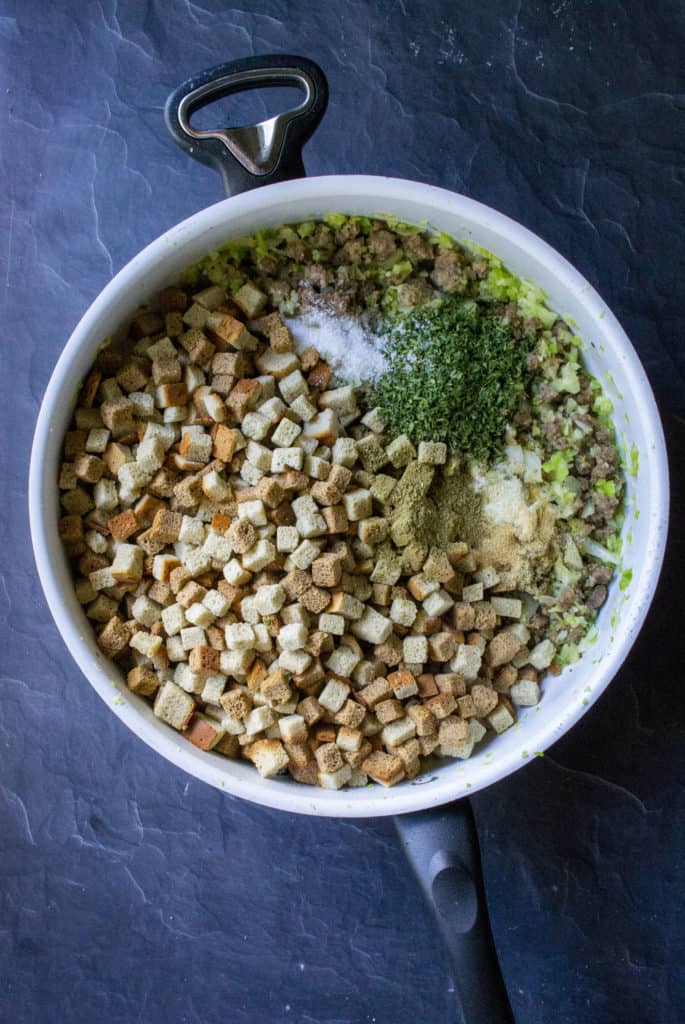
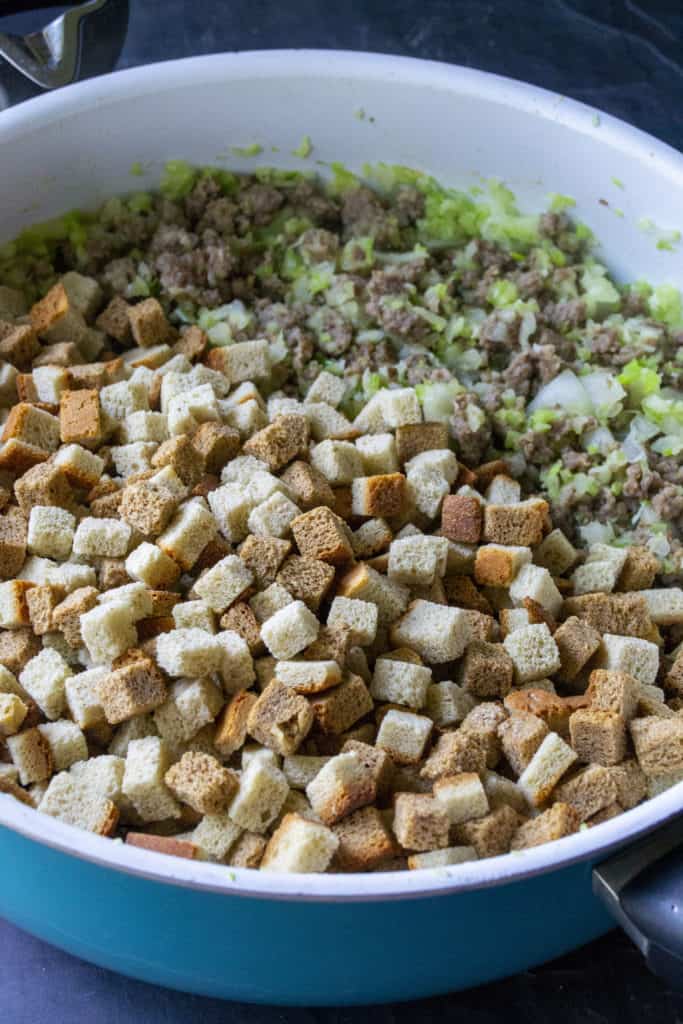
- Step 4: Combine the stuffing ingredients. Add the bread cubes, chicken broth, egg, poultry seasoning, garlic powder, onion powder, most of the parsley, salt, and black pepper. Gently stir until everything is evenly combined and the bread cubes are moistened.
- Step 5: Transfer to the casserole dish. Spoon the stuffing mixture into the prepared baking dish and spread it into an even layer. Cover the dish tightly with aluminum foil.
- Step 6: Bake the stuffing. Bake covered for 35 minutes. Remove the foil and bake for another 10 minutes, or until the top is golden brown and the stuffing is heated through. If prepared ahead and refrigerated, allow additional time as needed and check that the center reaches 165°F.
- Step 7: Finish and serve. Remove the casserole from the oven and sprinkle the remaining fresh parsley over the top. Serve warm alongside your favorite Thanksgiving dishes.
Tips No One Else Tells You About Stuffing
- Don’t drown the bread cubes. The goal is moist stuffing, not bread soup. Start with the 2½ cups of broth called for in the recipe, stir gently, and check the texture before adding more. Different brands of stuffing cubes absorb liquid differently, so you may not need any extra.
- Let the sausage drippings work for you. After browning the sausage, cook the onion, celery, and sage in the same skillet. Those savory drippings add flavor throughout the stuffing. You don’t need to drain away all that flavor unless there’s an unusually large amount of excess grease.
- Soften the vegetables before adding the bread. Give the onion and celery a few minutes to cook before adding the stuffing cubes. This helps soften the vegetables and develop their flavor instead of leaving you with crunchy bits in an otherwise tender casserole.
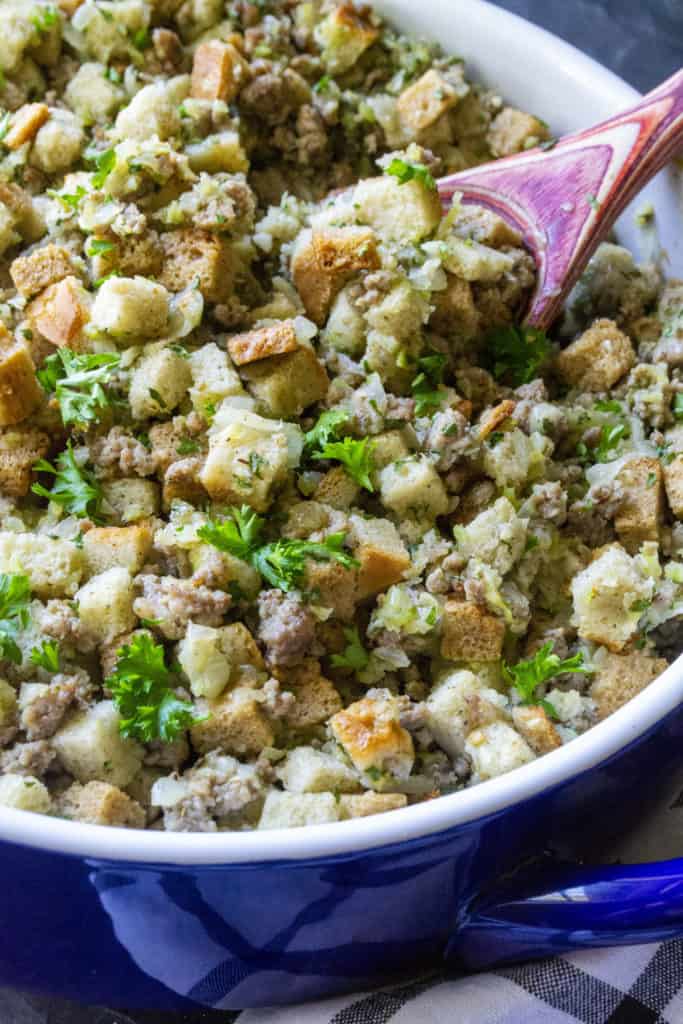
- Cover first, uncover later. Bake the stuffing covered for the first 35 minutes to help it heat through without drying out. Remove the foil for the final 10 minutes to let the top turn golden and slightly crispy.
- Want more crispy edges? Choose your baking dish wisely. A 9-by-13-inch casserole dish gives the stuffing a nice balance of a moist center and golden top. A deeper, smaller dish exposes less surface area and tends to produce softer stuffing.
- Use fresh herbs when possible. Fresh sage and parsley give this recipe its classic holiday flavor. If you substitute dried herbs, start with about one-third the amount of fresh herbs and adjust to taste.
- Mix the egg in thoroughly. The egg helps bind the stuffing so it holds together when served. Stir it evenly into the broth and bread mixture rather than letting it collect in one spot.
- Give the bread time to absorb the broth. After mixing everything together, let the stuffing sit briefly before transferring it to the baking dish. This helps the moisture distribute more evenly, so you don’t end up with some dry cubes and some soggy ones.
Frequently Asked Questions
Is it safe to cook stuffing inside the turkey?
- Baking stuffing separately is the safer, easier option. Stuffing cooked inside a turkey must reach 165°F in the center to be safe, and the turkey itself must also reach a safe temperature. Getting both done correctly can be tricky, and the turkey may take longer to cook. Baking this sausage stuffing in a separate casserole dish makes it easier to control the texture, get a golden, crispy top, and serve everything safely. Some people call stuffing baked separately dressing, but the terms are often used interchangeably.
How do I keep my Thanksgiving stuffing from getting mushy?
- Start with dried bread cubes and add the broth gradually. Store-bought stuffing cubes are already dried, which makes them a convenient choice for this recipe. If you’re using fresh bread, cut it into cubes and dry them in a low oven until they feel dry throughout. Add the broth gradually, tossing gently so the bread absorbs the liquid evenly. Bake the stuffing covered first, then uncover it for the final 10 minutes as directed in this recipe to help the top turn golden. Avoid adding extra broth unless the mixture needs it.
My stuffing is too dry. How do I fix it?
- Add warm chicken broth a little at a time. If the stuffing looks dry before baking, drizzle in a few tablespoons of warm broth and gently toss until the bread is moistened. If it seems dry during baking, carefully add a little broth around the edges and cover the dish again. The butter, sausage drippings, and egg in this recipe also help provide richness and structure. Add liquid gradually so you don’t trade dry stuffing for soggy stuffing.
Can I make Thanksgiving stuffing ahead of time or freeze it?
- Yes! You can chop the vegetables and prepare the sausage mixture ahead, then assemble the stuffing before baking. For the simplest make-ahead option, assemble the casserole, cover it, and refrigerate it promptly before baking the next day. Because this recipe contains cooked sausage and raw egg in the mixture, keep it refrigerated and avoid leaving it at room temperature. For freezing, freeze the stuffing after baking for the most predictable results. Cool it promptly, package it airtight, and freeze for best quality for about 2–3 months. Thaw in the refrigerator and reheat until the center reaches 165°F. You can also freeze individual portions for easy leftovers.
Do I need to cook the sausage and vegetables before adding them to stuffing?
- Yes, cook them first. Brown the pork sausage thoroughly, then sauté the onion, celery, and sage in the skillet so they soften and develop flavor. Cook the garlic briefly so it becomes fragrant without burning. This step helps prevent crunchy vegetables and ensures the sausage is cooked before it goes into the casserole. If you add other proteins, such as bacon, cook them thoroughly before mixing them into the stuffing, too.
Can I use fresh bread instead of stuffing cubes?
- Absolutely. Cut the bread into cubes and dry them in a low oven until the moisture has evaporated. Dry bread absorbs the broth while holding its shape, which helps create stuffing with a tender interior instead of a mushy texture. Store-bought stuffing cubes are simply a convenient shortcut, especially when you’re preparing several dishes for Thanksgiving dinner.
How much broth should I add to sausage stuffing?
- Start with the amount listed in the recipe, then check the texture. This recipe uses 2½ cups of chicken broth for a 14-ounce package of stuffing cubes. Because different brands absorb liquid differently, you may need a little more or less. The bread should feel moist throughout without sitting in a puddle of broth. If you need more liquid, add it gradually rather than pouring it all in at once.
How do I get crispy stuffing on top?
- Bake the stuffing covered first, then remove the foil near the end. The covered baking time helps the stuffing heat through while retaining moisture. Removing the foil for the final 10 minutes allows the surface to turn golden. For extra crispy edges, spread the stuffing in a wide casserole dish rather than a deep, narrow one.
What sausage is best for traditional stuffing?
- Ground pork sausage is my first choice. Regular pork sausage works well, while sage-seasoned sausage adds even more classic holiday flavor. Italian sausage or turkey sausage can also be used, but each will change the taste of the finished stuffing. If your sausage is heavily seasoned, adjust the added salt and spices to taste.
Can I add apples or cranberries to sausage stuffing?
- Yes! Diced apples add a little sweetness that works well with pork sausage and fresh sage. Dried cranberries add a sweet-tart bite, while chopped pecans or walnuts bring crunch. Add these extras in moderation so they complement the traditional stuffing rather than changing its texture too much.
Make-Ahead, Storage, and Reheating
Make Ahead
Prepare the vegetables and sausage mixture ahead of time, or assemble the entire casserole the day before. Cover and refrigerate the assembled stuffing promptly, then bake it the following day. Allow extra time if the casserole is cold from the refrigerator and check that the center reaches 165°F before serving.
Store Leftovers
Allow leftover stuffing to cool slightly, then transfer it to a shallow, airtight container and refrigerate within two hours of cooking. Store in the refrigerator for 3–4 days.
Reheat Stuffing
For the best texture, place the stuffing in an oven-safe dish, cover it with foil, and reheat at 350°F until the center reaches 165°F. Add a small splash of broth if it seems dry. Remove the foil toward the end if you want to bring back some of the crispy top.
Can You Freeze Sausage Stuffing?
Yes. Cool the stuffing, portion it into freezer-safe containers, and freeze for about 2–3 months for the best quality. Thaw it in the refrigerator before reheating, and heat the center to 165°F. The texture may be a little softer after freezing, but it is still a convenient way to prepare part of your holiday meal in advance.
What to Serve with Thanksgiving Stuffing
This traditional sausage and herb stuffing is right at home on a Thanksgiving or Christmas table. Serve it alongside:
- Sweet Potato Casserole
- Cranberry Apple Pecan Wild Rice Pilaf
- Slow Cooker Sweet Potato Casserole
- Sage Biscuits
- Garlic Parmesan Mashed Parsnips
- Slow Cooker Sausage Stuffing
- Easy Cheesy Scalloped Potatoes
It’s also delicious served with roast chicken for a comforting Sunday dinner outside the holiday season.
Make This Traditional Sausage and Herb Stuffing
A classic stuffing recipe doesn’t need to be complicated. Savory pork sausage, fresh herbs, tender vegetables, and seasoned bread cubes come together in one casserole dish for an easy Thanksgiving side full of familiar flavor.
Make it ahead, bake it until the top is golden, and get one more dish ready for the holiday table. And if you’re anything like me, make sure you get a scoop before everyone else comes back for seconds!
Old Fashioned Sausage Stuffing


Ingredients
- 1 pound ground pork sausage
- 1/2 cup butter
- 1 large sweet onion diced
- 3 celery ribs diced
- 1/8 cup fresh sage minced
- 3 cloves garlic minced
- 14 ounce package store-bought stuffing cubes
- 2-1/2 cups chicken stock
- 1 large egg
- 1/4 cup fresh parsley, divided chopped
- 2 teaspoons poultry seasoning
- 1 teaspoon garlic powder
- 1 teaspoon onion powder
- 1/2 teaspoon salt
- 1/2 teaspoon black pepper
Instructions
- Preheat your oven to 350 degrees and butter a 9 x 13 casserole dish and set aside.
- Start by removing the ground sausage from it's packaging and adding it a large skillet over medium-high heat. Cook for 5-6 minutes or until no longer pink, breaking up the meat with a spatula.
- Add in the butter, onion, sage and celery to the pan and cook for 3-4 minutes or until the vegetables are tender and add the garlic and cook for about 30 seconds. Pour in the store-bought bread cubes to the skillet then add chicken stock, egg, poultry seasoning, garlic powder, onion powder, most of your parsley and salt and pepper.
- Gently stir until everything is well combined then transfer the stuffing into the prepared pan.
Cover with foil and bake for 35 minutes. Uncover and bake for another 10 minutes or until top is golden brown. - Remove from the oven. Sprinkle with reserved parsley, then serve.
Notes
PRO TIPS FOR PERFECT OLD FASHIONED STUFFING
- I use sage and parsley in my sausage stuffing recipe but feel free to add some fresh rosemary or thyme as well, if you like.
- This recipe delivers moist stuffing without it being ... too moist! If you prefer a more wet stuffing, add a bit more chicken stock until you reach your desired consistency.
- I use a handy-dandy mini food processor to cut my veggies. If you like your vegetables a bit chunky, cut by hand. If you like things easy (like me!), break out that food processor and let it do the work for you.
- After cooking your sausage, add you veggies right into that pork fat... so much extra flavor and calories don't count at the holidays, right?
- Be sure to uncover your stuffing the last 10 minutes of cooking. Uncovering the stuffing near the end gives you those crispy pieces on the top but you still get the moist stuffing inside.
Nutrition
Update Notes: This post was originally published in December of 2019 but was republished with an updated recipe, new photos, step by step instructions and tips in October of 2026.




This sausage and herb stuffing is one of those Thanksgiving sides that deserves a spot on the table every year. Savory pork sausage, fresh sage, and tender vegetables give it plenty of flavor, while the golden, crispy top is the perfect contrast to the soft, seasoned bread underneath. It’s comforting, easy to make, and just as welcome alongside a holiday turkey as it is with a Sunday dinner. And honestly, the crispy edges might be the best part!